


How to walk into a studio and walk out with 30 pieces of content, without losing your mind halfway through.
Most creators spend their entire month producing content one piece at a time — one reel on Monday, one lesson on Thursday, a podcast squeezed in on the weekend. It’s exhausting. And the output still feels thin.
A content batch day flips that completely. You block a single day, show up fully prepared, and leave with a month’s worth of material already recorded. Done. The secret isn’t the studio — it’s how you use the time inside it.
After working with dozens of course creators, coaches, and digital educators here at Villo Studio in Canggu, we’ve identified five things that separate a batch day that produces 30 polished pieces from one that produces 12 tired-looking ones. Here they are, in full.
How a full batch day actually runs
Before the tips, here’s the rhythm. A good batch day has three distinct phases, each designed for a different kind of mental energy.
08:00 – 13:00 · Morning — Course block 20 short lessons recorded back-to-back on a teleprompter setup. Consistent framing, clean audio, no re-lighting between takes. This phase demands precision and script discipline, so it goes first while you’re fresh.
13:00 – 16:00 · Midday — Reels sprint 10 short-form clips. Hooks, talking-head pieces, quick tips — some shot fresh, some clipped directly from your morning course footage. One wardrobe change; two distinct looks. High energy, shorter scripts, faster pace.
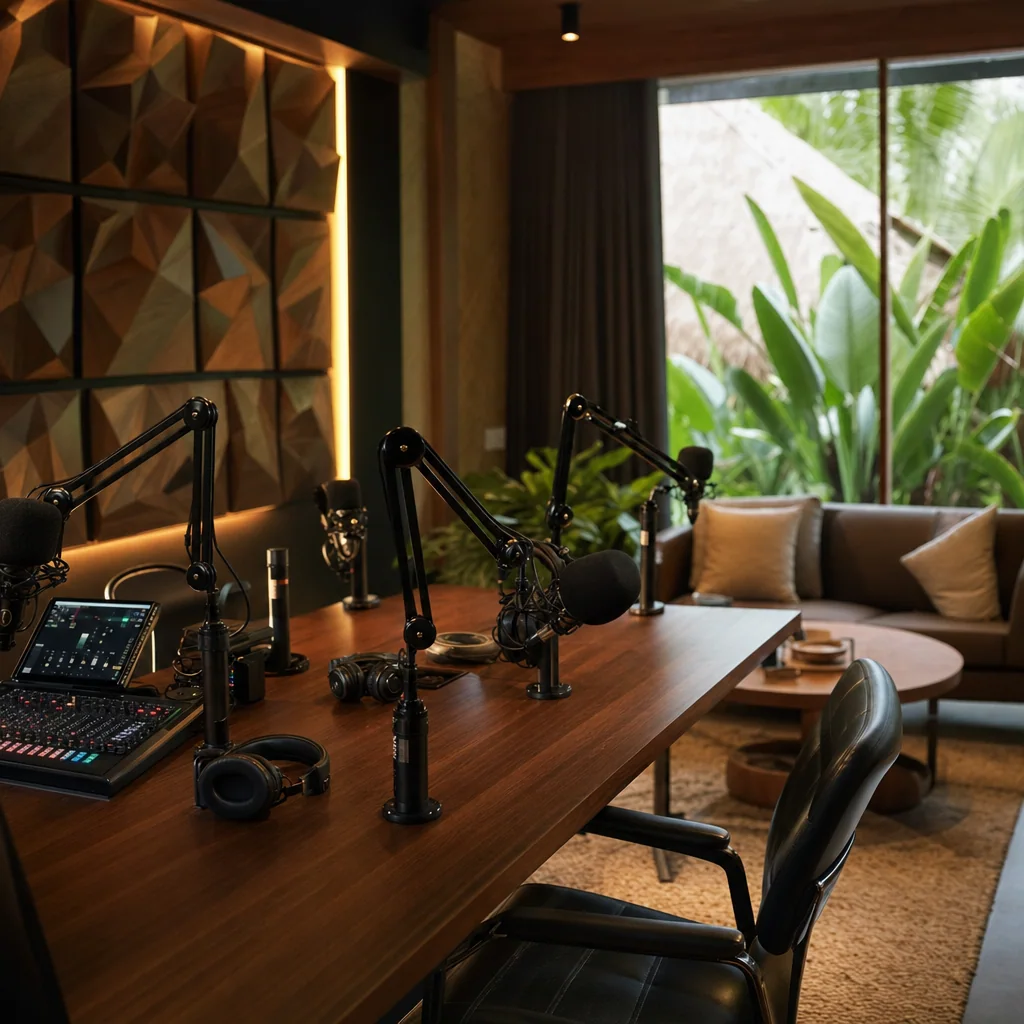
16:00 – 18:00 · Afternoon — Podcast sessions 3 episodes recorded in the acoustic booth — solo or with a guest. Multi-camera gives you the video version automatically. Conversation is mentally draining, so it lives at the end of the day, never the beginning.
What separates a great batch day from a wasted one
These are the patterns we see over and over. The creators who leave with 30 clean pieces do all five. The ones who leave with 15 shaky ones skipped at least two.
Tip 1 — Script everything before you arrive
The studio is for recording — not thinking. Every minute you spend rewriting a lesson or reworking a hook inside the studio is a minute not recording. And when time runs out, it’s always the last 5 pieces that don’t get made.
The rule: All lesson scripts, reel hooks, and podcast talking points must be written at least 3 days before your session. Load them into the teleprompter the night before. Arrive with zero script decisions left to make.
Tip 2 — Plan two outfits, not one
If 20 lessons and 10 reels all have you in the same shirt, your audience will immediately clock that everything was recorded in one sitting. You lose the sense of a sustained, active creator. One wardrobe change is all it takes to fix this.
The logic: Outfit A (polished, on-brand) for course lessons. Outfit B (more casual, higher energy) for reels. Change after the morning block. You’re not fooling anyone — but the variety creates visual breathing room across a month of posts.
Tip 3 — Keep lessons under 8 minutes
Short lessons are faster to record, easier to re-take when you stumble, and they have measurably higher completion rates on every major course platform. There’s no good reason to make a lesson long if the idea can be taught in five minutes.
The upside: If a topic genuinely needs more depth, split it into two lessons instead of stretching one. You’ll end up with more content pieces, not fewer — and your students will thank you.
Tip 4 — Mine your course footage for reels
Don’t treat reels as a completely separate shoot that has to happen after the lessons. Before you change outfits and move to the reels phase, spend 10 minutes rewatching your morning takes and flagging the strongest moments.
What to look for: A counterintuitive opening line. A punchy conclusion. A moment where you leaned forward and said something with real conviction. Those clips get cropped, captioned, and posted as reels. One take — two deliverables. You might find half your reel content already exists.
Tip 5 — End with podcast, never start with it
Scripted recording and conversational recording use different cognitive muscles. Scripted work — lessons, reels — demands precision. You’re reading, hitting marks, maintaining consistent energy. Conversation feels easier, but it quietly drains your decision-making capacity.
The consequence: If you start with 3 podcast episodes, you’ll reach your lesson block feeling loose and unfocused. The precision required for a clean 20-lesson run disappears. Always do structured work first. Save the free-flowing conversation for when everything important is already in the can.
The creators who walk out with 30 pieces didn’t work harder. They prepared differently.
The pre-session checklist
Complete everything below before your batch day and you’ll spend zero time on logistics inside the studio. Every minute is recording time.
7 days before
- Outline all 20 lesson topics and their key takeaways
- List your 10 reel hooks (one sentence each)
- Book your podcast guest (if applicable) and share a topic outline
3 days before
- Write all lesson scripts in full (aim for 600–900 words per lesson)
- Write reel scripts — hook, body (2–3 points), CTA
- Confirm podcast episode angles and any stats or references you’ll cite
- Plan both outfits and confirm they’re clean and ready
Night before
- Upload all scripts to the teleprompter app and do a test read
- Pack both outfits (do not leave this for the morning)
- Sleep 7+ hours — vocal energy and focus are directly tied to rest
A content batch day in Bali costs a fraction of what a single studio day runs in most Western cities — and Villo Studio handles the gear, crew, lighting, and teleprompter setup so you show up and focus entirely on performance. The 5 tips above are the difference between leaving at 6pm feeling spent but satisfied, and leaving at 3pm wondering what went wrong.
If you’re planning a batch day, book a session and send us your content breakdown in advance. We’ll help you structure the day so every format gets the right amount of time — no guessing, no rushing at the end.