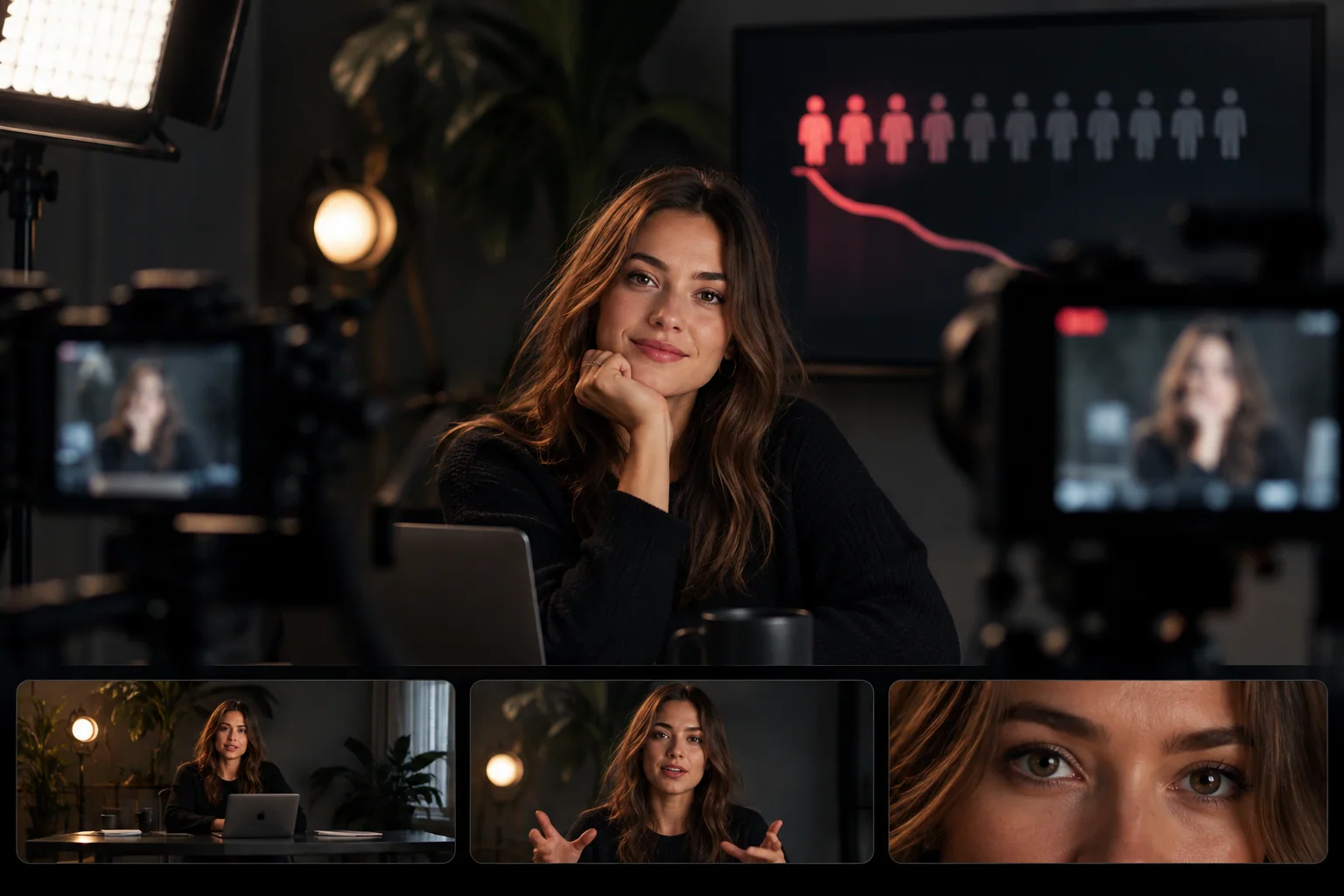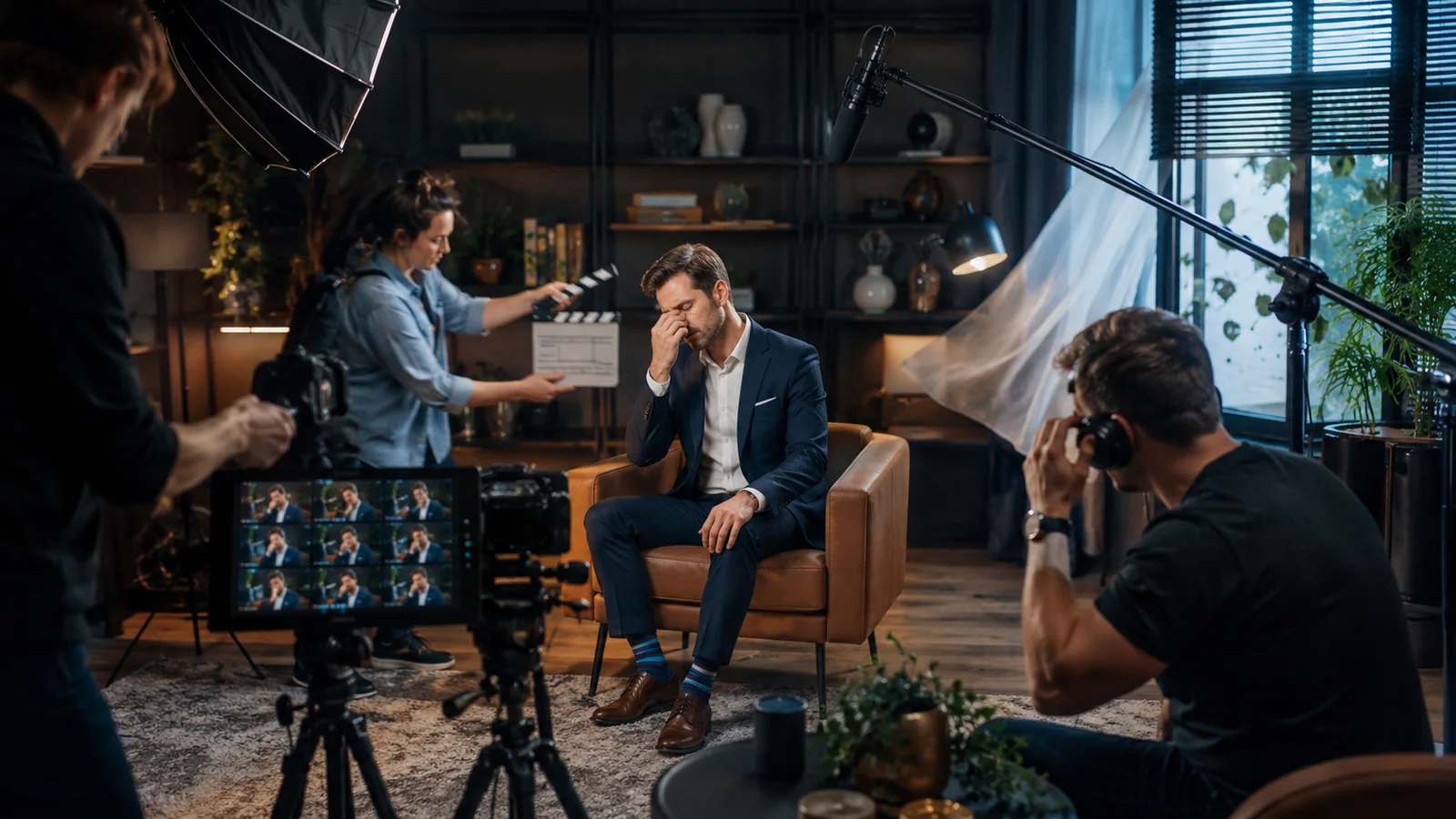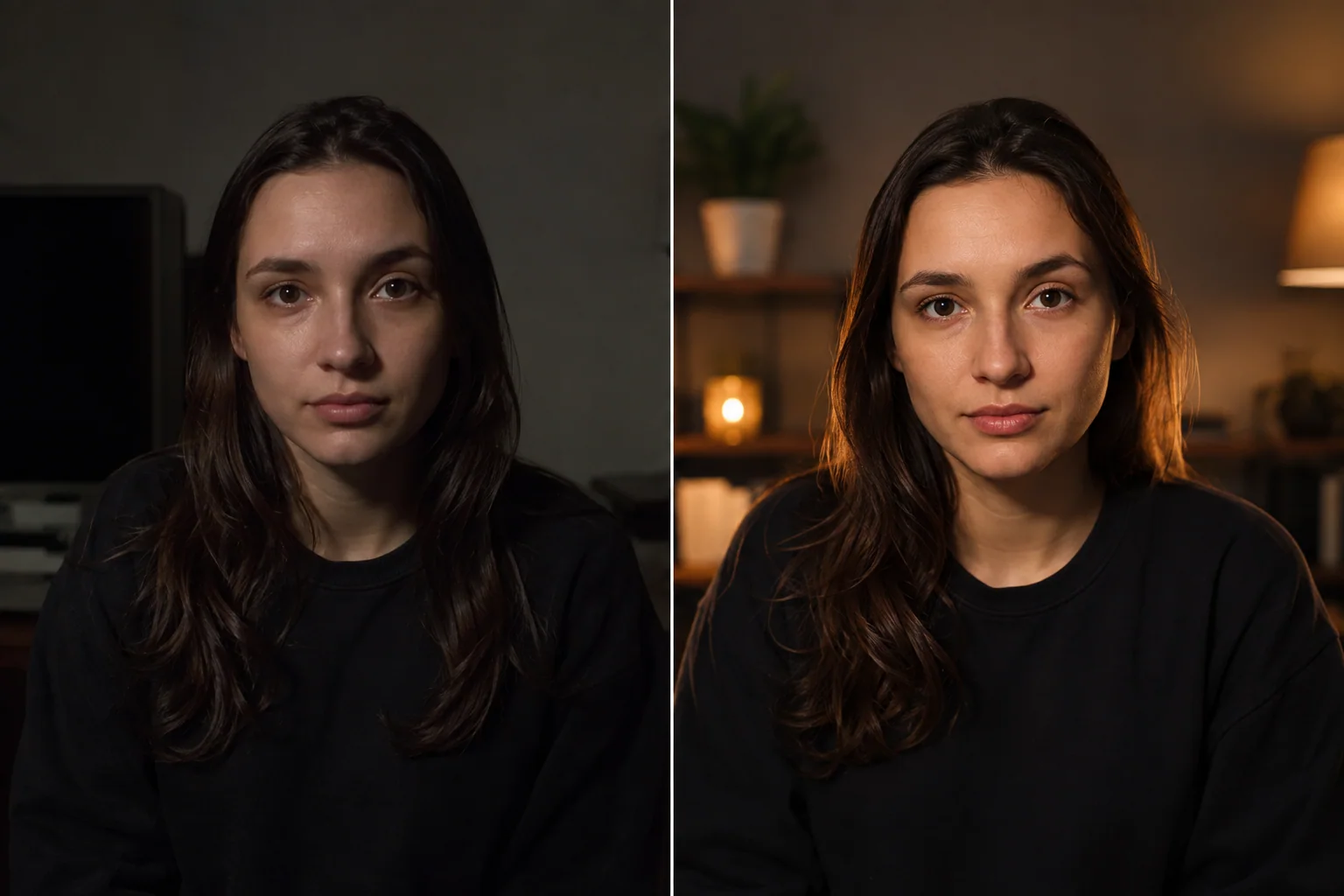


Composition: The Frame Tells the Story Before You Do
Buy a better camera and you’ll get better files. Sharper edges, cleaner highlights, more room to push in post. What you won’t automatically get is a better shot — because the camera doesn’t decide where to stand, what to leave out, or when to cut. You do.
That’s the part gear can’t fix, and it’s also the part most creators skip. Composition is unglamorous. It doesn’t show up on a spec sheet. Nobody posts “I thought carefully about negative space today” and gets the same engagement as “just upgraded to the new body.” So it gets treated as a finishing touch instead of the actual foundation it is.
Here’s the uncomfortable version: a well-framed shot on a phone will consistently beat a poorly framed shot on a cinema camera. Not sometimes — consistently. Because the eye doesn’t evaluate resolution first. It evaluates where you’re being pointed to look. A frame with a clear subject, deliberate negative space, and a sightline that leads somewhere reads as intentional even at lower fidelity. A frame with all the right gear but no hierarchy — subject competing with background, headroom that’s just wrong, a horizon line cutting the person in half — reads as amateur no matter how many megapixels built it.
And the window in which this gets decided is shorter than most creators plan for. One widely cited figure puts the stay-or-scroll decision at 71% of viewers within the first few seconds of a video1 — the opening frame is doing that work before a word has been said. On Instagram specifically, a view isn’t even counted until 3 seconds in2, which means bad headroom or a cluttered background can cost you the view before it registers as one.
Why “better gear” becomes a trap
Gear upgrades are seductive because they’re solvable. You can research a camera body, compare specs, make a purchase, and feel like you did something. Composition doesn’t offer that same closure. You can’t buy your way to a better eye. That asymmetry is exactly why so many creators end up gear-rich and frame-poor — they’ve optimized the part of the problem that has a checkout button.
The result is a specific, recognizable failure mode: technically excellent footage of nothing in particular. Beautiful dynamic range. Perfect color science. And a shot that doesn’t know what it’s about.
That failure mode has a measurable cost downstream. Retention Rabbit’s benchmark data shows over 55% of YouTube viewers are gone within the first minute3, and Wistia’s own 2026 report puts average engagement for videos under a minute at 52%4 — with consistent framing across cuts named as one of the factors that keeps a viewer’s eye anchored instead of hunting for orientation on every edit. It shows up at the sales end too: Wyzowl’s 2026 survey found 85% of people say they’ve been convinced to buy a product or service after watching a video5, and gear alone doesn’t explain that gap — composition does the trust-building a spec sheet can’t.
What “the frame tells the story” actually means
Before a single word is spoken, the frame has already made claims:
- Who matters. Where the subject sits in the frame — dead center, off to a third, small against a big environment — tells the viewer how much weight to give them before they’ve said anything.
- What kind of story this is. Tight, controlled framing reads as intimate or tense. Wide, loose framing reads as observational or exposed. These aren’t neutral choices; they’re the tone-setting the audience absorbs in under a second.
- Where to look next. Leading lines, negative space, and depth cues either guide the eye deliberately or leave it to wander — and a wandering eye disengages fast.
None of that requires expensive equipment. It requires a decision, made before you hit record, about what the shot is actually for.
The practical shift
This isn’t an argument for ignoring gear — better tools genuinely help once the fundamentals are solid; they just can’t substitute for them. The shift worth making is in sequencing: treat composition as the first decision, not the last polish. Frame the shot with intention before worrying about whether the sensor is good enough to capture it.
The creators who consistently outperform aren’t the ones with the deepest kit list. They’re the ones who’ve internalized that the frame is doing narrative work whether they’ve planned it or not — so they might as well plan it.
Gear doesn’t hold attention. Framing does. A well-composed shot on a $200 camera can outperform a poorly framed one on a $2,000 camera.
Sources (cross-checked before publishing):
1. Marketing LTB, Short-Form Video Statistics — figure appears only on this aggregator site with no visible primary study; treat as unconfirmed.
2. Sendible, “Video Metrics 101” (2025) — confirmed directly.
3. Retention Rabbit, “2025 State of YouTube Audience Retention” (10,000+ video sample) — confirmed directly.
4. Wistia, 2026 State of Video Report — confirmed directly (52% under one minute; a 65% figure circulating via a third-party site did not match Wistia’s own published number).
5. Wyzowl, 2026 State of Video Marketing survey — confirmed directly (85% figure; an 82% figure circulating elsewhere could not be matched to Wyzowl’s current report and was dropped).