


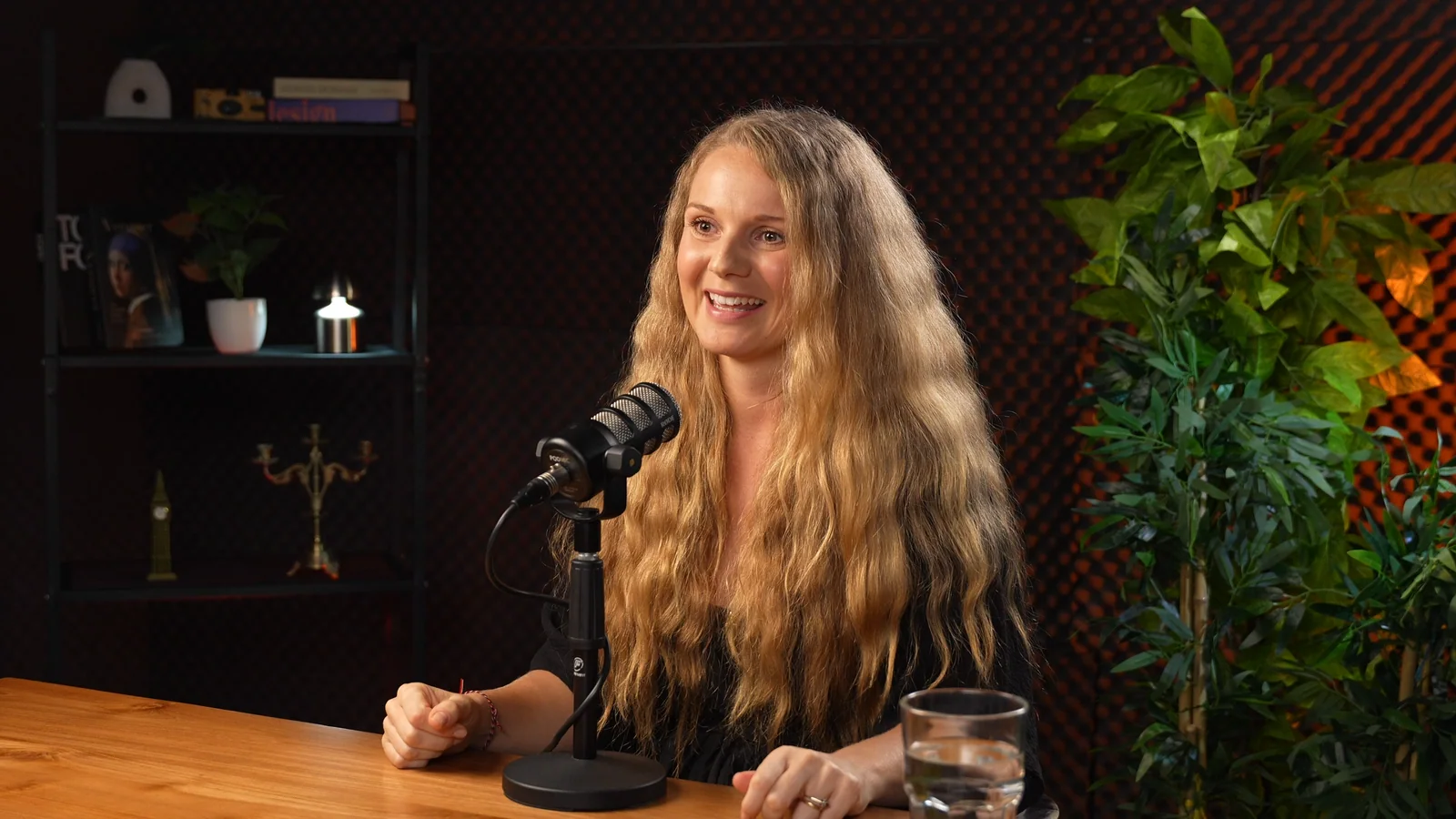
The Podcast Guest Effect
Why co-hosted episodes outperform solo ones — and what that’s doing to the shows that lean into it.
Every podcaster eventually faces the same scheduling decision: record solo, or bring someone else into the room. Solo episodes are easier to plan, cheaper to produce, and let you go exactly where you want with a topic. Guest episodes are more work — coordinating calendars, briefing someone new, occasionally absorbing an awkward silence live. It’s tempting to treat the choice as a matter of personal preference. The data suggests it’s closer to a growth strategy decision.
The mechanism: borrowed audience, not just borrowed content
A solo episode reaches the audience you already have. A guest episode reaches that same audience, plus a slice of whatever audience your guest brings with them — provided the guest has one, and provided they actually promote the appearance. That’s not a subtle difference; it’s a structurally different distribution model. One is addition. The other is closer to multiplication, because the guest’s audience and your audience were, until that episode, two separate pools that had never been introduced to each other.
How much this actually moves downloads varies enormously — a guest with a large, highly engaged, cross-promoting audience can meaningfully spike an episode’s numbers; a guest who quietly forgets to mention the show anywhere does far less. Industry estimates for the range are wide (one commonly cited figure puts the swing at roughly 20–300%), which mostly tells you the mechanism is real but highly guest-dependent — the boost comes from what the guest actually does with their platform, not from the mere fact of having a guest.
Why the pool you’re reaching into matters
Podcasting is no longer a niche medium worth fighting over the margins of. In the US, 57% of the population — an estimated 202 million people — now listen to a podcast at least monthly, according to Edison Research’s 2025 Infinite Dial study. That’s a genuinely mainstream audience, on par with plenty of legacy media formats.
What that means practically for a guest episode: every co-host you bring on has their own slice of that 202 million, and unless there’s meaningful overlap with your existing audience, most of that slice has never heard of your show. Solo episodes deepen your relationship with the people already listening. Guest episodes are one of the only levers that actually expands who’s in the room in the first place.
Video makes the guest effect compound further
The audience benefit of a guest episode isn’t limited to downloads on the day it drops. Recorded on video, a single guest conversation becomes raw material for weeks of additional content — a YouTube upload, a handful of short-form clips, a Reel built around the best exchange in the conversation. Video podcasts as a category are reported to be growing significantly faster than audio-only shows, and a guest conversation is exactly the kind of content that benefits most from multi-format cutting, since the guest’s name and reputation give each individual clip its own reason to get shared.
This is where the production setup starts to matter as much as the booking decision. A guest episode shot on a single camera with average audio still works as a podcast episode. The same conversation shot on multi-camera, with clean audio on every mic, is also a YouTube upload, a set of short-form clips, and B-roll — all from one session, all carrying the credibility of a second voice in the room.
The compounding part: loyalty, not just reach
A new listener who arrives via a guest episode and doesn’t stick around is a one-time spike. The value shows up when that listener becomes a subscriber — and subscribers behave very differently from casual visitors. Listeners who subscribe consume 4x more episodes than casual listeners, according to Spotify’s 2024 podcast listener data. That’s not casual browsing; that’s a listener who has made podcasts a real part of their week, and who — once they’ve converted from a guest’s audience into your subscriber base — has a lot of runway to keep listening.
That’s the real compounding effect of a guest episode. It’s not just the one-time download bump. It’s the number of new subscribers who convert from “heard of you because of a guest” to “part of your regular rotation,” each one carrying forward into every future episode you publish.
Guest episodes as native advertising, not just content
There’s also a trust dimension worth naming. Podcast advertising already converts well — 46% of weekly podcast listeners report having purchased a product or service after hearing a podcast ad, according to Edison Research. A guest appearance functions similarly, but with more credibility than a paid spot: it’s an endorsement embedded in a real conversation, not a scripted read between segments. When a guest with an engaged audience appears on your show and speaks candidly, that carries weight a pre-roll ad simply can’t replicate.
The takeaway
Solo episodes and guest episodes aren’t competing formats — they serve different jobs. Solo content deepens the relationship with people who already know you. Guest content is one of the few reliable ways to get in front of people who don’t. The shows that grow fastest tend to treat guest booking not as an occasional change of pace, but as a deliberate, recurring part of the content calendar — because every guest is, in effect, a distribution channel that didn’t exist for the show the day before.
Related: Podcast Audio Production Guide 2026