

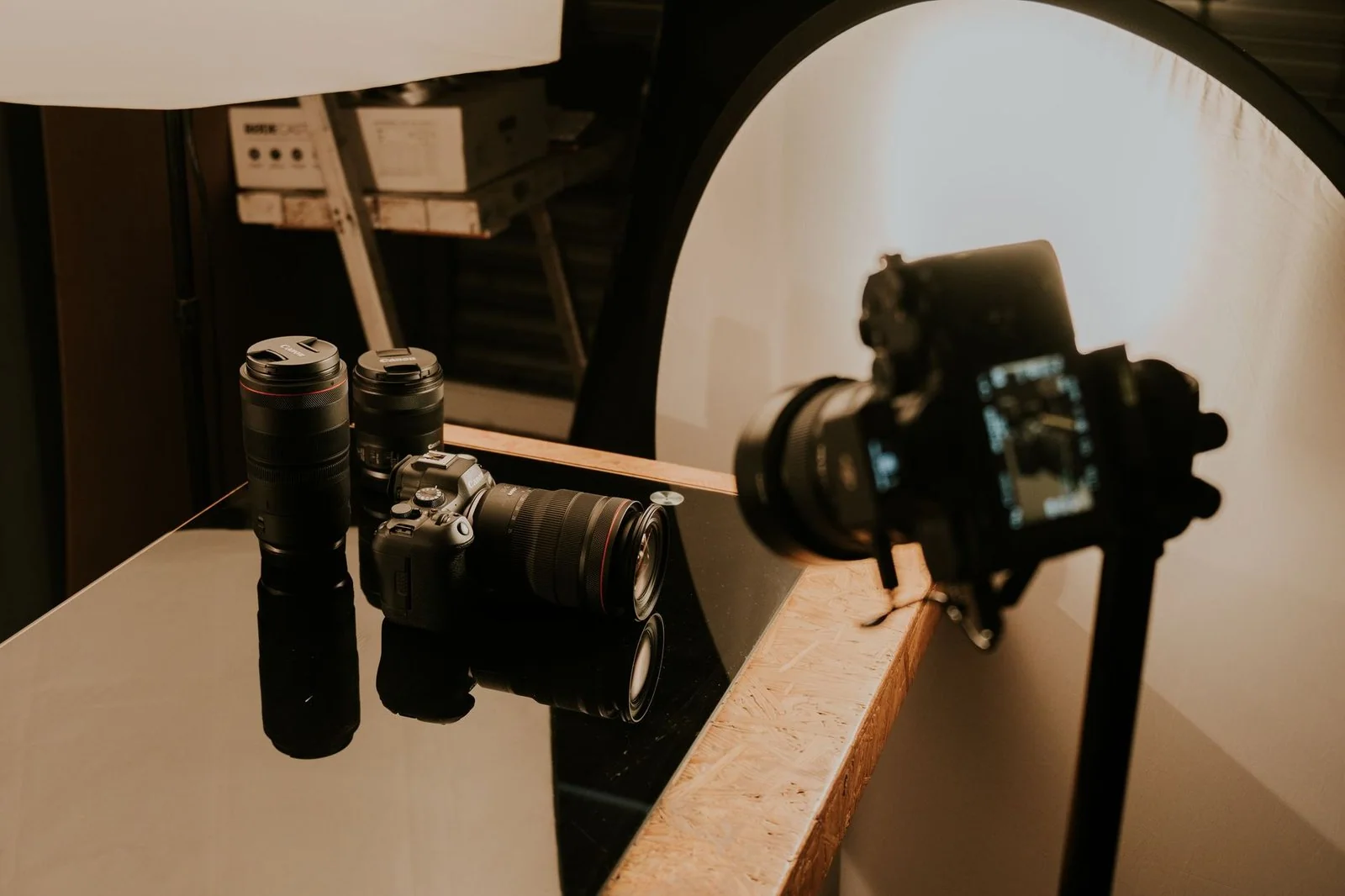
AI studio portraits look convincing until a brand client asks for the RAW files, the BTS video, or a second look with different lighting. The $15 AI headshot closes exactly zero licensing deals. In 2026, with brands spending over $32 billion on influencer and creator content, the professional photo studio is not dying – it’s splitting into two tiers: serious production and everything else.
Why AI Studio Photos Keep Losing Brand Deals
Upload a selfie, choose a backdrop style, pay $15, get 20 portraits in under an hour. For a LinkedIn profile update or a Substack avatar, that’s a reasonable shortcut.
For anything involving a brand relationship, it falls apart at the first deliverable review.
At the $1,000-2,500 B2B commercial content level, SaaS companies, course platforms, and agencies have three requirements AI cannot meet. First, they need a licensed RAW file for print and retouching rights. AI outputs a JPEG with no licensing chain. Second, they need a model release, signed by a real person on a real shoot day. An AI-composited face has no release to sign. Third, they increasingly ask for BTS content for social proof. There is no studio to shoot behind.
That $32 billion is going to real creators with real production infrastructure. AI works for evergreen content at scale. It fails commercial review the moment a licensing department looks at the file.
What a Professional Photo Studio Actually Contains
The photo studio rental market is worth $1.8 billion in 2025. Hourly rental makes up 42.3% of it. Most hourly clients have no clear picture of what they’re actually renting. They book “a studio” and expect things to work out.
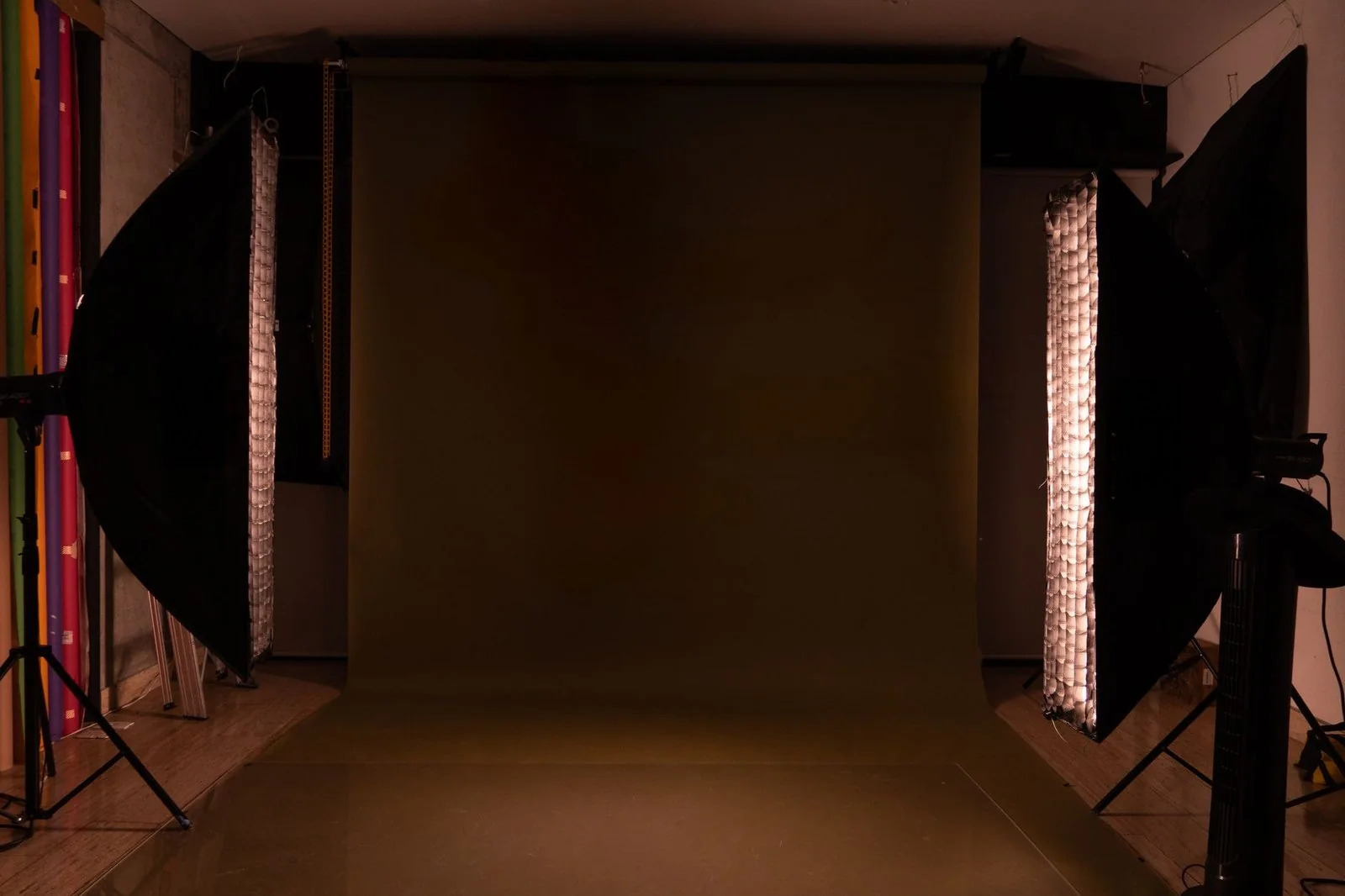
A production-capable studio has six components:
- Cyclorama or seamless backdrop wall – floor-to-ceiling curved corner, no visible seam, allows infinite-background shots at any angle.
- Strobe lighting system – Profoto B10 Plus or equivalent, not continuous LED panels. Strobes freeze motion and eliminate ambient light interference at higher shutter speeds.
- Light modifiers – octaboxes for soft wrap, beauty dishes for contrast, strip lights for edge definition. The modifier choice shapes the final look more than the camera body does.
- Grip gear – C-stands, sandbags, boom arms. Without grip, the lighting assistant is holding a reflector by hand.
- Tethered shooting setup – camera connected to a client monitor so every frame is visible in real time. This eliminates the “I’ll check the files later” conversation that sends people back for reshoots.
- Prop storage and basic styling support – clean surfaces, risers, brand-consistent backgrounds. For product shoots, this is the difference between a clean image and 45 minutes of improvising with gaffer tape.
A studio listing “professional equipment” without naming a single brand is running generic consumer LED panels or assuming you won’t ask. Across 1,138 sessions, clients who specified gear by brand (Sony FX3, Aputure 600D, Shure SM7B) made up 31% of bookings and had the highest average session value. Ask for the make and model before you book. Confident studios answer immediately. Five pieces of equipment worth checking before any session are covered here.
Professional Studio vs. Cheap Hourly Rental: 5 Things to Check
Five direct questions separate a production-ready space from bare-bones square footage:
1. Is a photographer included, or do you bring your own?
Many hourly rentals are space-only. If you’re a brand expecting direction and someone behind the camera, “space only” means an expensive empty room.
2. Is editing in the package – and what does that mean exactly?
“Editing included” can mean basic colour correction on 10 selects or full retouching on 50 images. Get the specific scope in writing before the session, not after.
3. Is there a crew for styling or grip?
A lighting technician saves an hour of setup on every shoot. A styling assist removes the “hold on, let me fix my collar” problem multiplied across 200 frames. Single-operator studios on multi-setup sessions are slower, and the output reflects it.
4. What is the turnaround on delivered files?
48 hours and 10 business days are both “fast turnaround” depending on who you ask. Get the exact number before you hand over a deposit.
5. Can the space handle product, portrait, and video in a single session?
Studios without a second backdrop zone or basic acoustic treatment force separate sessions – which costs more and creates continuity problems across the final content set.
A direct comparison of what dedicated production space delivers versus improvised setups: professional studio vs home studio, with specifics on what actually changes in the output.
Full Production Support: What It Is and Why It Changes the Output
“Full production support” means the photographer directs and shoots, a lighting tech adjusts modifiers between setups, and a post-production pass delivers colour-corrected and retouched selects within an agreed window.
Bare studio space in Bali starts around $36 for a two-hour minimum. Add a freelance photographer at $150-400 and a retoucher at $50-150, and you’re at $236-590 before anyone touches the lighting rig. Three separate contracts, three invoices, three people who’ve never worked in the same room together.
A bundled production package covers all of this in one booking. The session runs faster because the photographer and lighting tech have worked together before. The edit arrives from someone who was in the room, not from an outsourced file that landed cold in someone’s inbox. For brand campaigns and course catalogues, that consistency across sessions is worth more than the hourly rate difference. Villo Studio professional photography is built around this model.
Studio Photo in Bali: What the Canggu Creator Hub Actually Needs
Canggu concentrates around 20,500 of Bali’s 60,500-strong expat population. A significant share work in the creator economy: podcasters, course creators, UGC contractors, brand content producers. The creator economy hit $252 billion in 2025, with photo and video production accounting for 44.3% of that market.
The Bali studio market serves them well on price. Less well on compliance.
Since 2025, Indonesia has tightened enforcement: commercial shooting on a tourist visa is classified as illegal work. This applies to anyone shooting paid content on a B211 visa. SCMP documented the enforcement directly in 2025. Balinese immigration authorities have acted on it.
Working with a licensed local production studio, where the studio operates the equipment and provides the crew, is the compliant path. Renting bare space and operating it yourself as a commercial production crosses into work-visa territory. Most studio listings omit this quietly. Content creator studio in Bali goes into this in detail.
First Studio Photo Session: a Short Prep Checklist
The e-learning market hit $325 billion in 2025. Seventy percent of course creators name their course as their primary income source. Most need studio-quality headshots, course thumbnail portraits, and module intro footage as core deliverables. Getting those assets efficiently requires preparation, not talent.
Eight things to handle before you arrive:
- Define the deliverable before booking. A brand kit update needs different setups than a UGC content pack. Deciding on the day wastes setup time and produces a mixed bag with no clear use case.
- Bring at least 2-3 outfit changes. One outfit photographs well in one lighting setup. Three gives you options across LinkedIn, website header, and Instagram without a second session.
- Share your brand colour palette with the studio in advance. Backdrop selection, prop surfaces, and gel choices all interact with your brand colours. Five minutes of advance prep prevents 45 minutes of on-set corrections.
- Arrive 20 minutes early. The lighting test takes real time, and subjects warm up gradually. Showing up on the hour and starting immediately costs you in the output.
- Confirm retouching scope in writing. Specify: how many selects, what level of skin work, whether background cleanup is included. “Light retouching” means different things in different studios.
- Ask about BTS video. It’s often included and rarely requested. A 30-second behind-the-scenes clip is a genuinely useful social asset. Most studios can capture it at no extra cost. Most clients forget to ask until they’re in the car home.
- Check file delivery: RAW plus high-res JPEG, not web exports only. Web exports fall apart in print, on large display monitors, or when a designer needs to composite you into a brand template.
- Confirm turnaround time before you leave the studio. In person, on the day – not by email four days later. Much easier to set expectations face-to-face than chase a timeline by email.
For brand-specific requirements – campaign content, product line shoots, or content anchoring a launch: photo studio in Bali for brands.
FAQ
Where do I find a photo studio near me?
Search “photo studio near me” on Google Maps for hourly rentals. For production packages with crew included, search “professional photo studio” and check what’s in the rate – bare space and full production are priced similarly but deliver differently. Confirm whether a photographer is included or the listing is space-only.
What is an AI studio photo and how does it work?
You upload a selfie; the AI composites you into studio-style backgrounds across multiple styles. It works for social avatars and profile photos. It does not produce licensed RAW files, model releases, or BTS footage – so it fails commercial brand review at the deliverable stage. Useful at one tier. Unusable at another.
How do I prepare for my first photo shoot in a studio?
Bring outfit changes, share your brand references before the day, confirm retouching scope in writing, and arrive early for the lighting test. The full checklist is in the section above.
How much does renting a photo studio cost?
Bare-space hourly rental in major markets runs $50-200 per hour. A full production package in Bali – photographer, lighting, editing included – starts from $75 per session at Villo, covering what three or four separate freelancer invoices would cost in the US market.
What happened to traditional photo studios?
The hourly-rental tier is healthy – a $1.8 billion market growing to $3.6 billion by 2034. The studios that struggled were mid-tier: not cheap enough to compete on price, not capable enough for commercial production work. Full-production studios are busier than five years ago. The market polarised; it did not shrink.
What is the difference between a studio photo and an outdoor portrait?
Studio gives you full control over light, background, and conditions – no wind, no unexpected cloud cover, no shadow from a tree that wasn’t in the frame yesterday. Outdoor gives you natural texture and light, but no consistency across a campaign. For brand content that needs to match across a product line or content series, studio is the practical choice.
If you’re planning a shoot in Bali, whether a single session or a multi-day content sprint, see what a full production booking at Villo looks like and contact us to check availability. We don’t do space-only.