

Corporate video has evolved far beyond the stiff, talking-head productions of the past. Today’s most effective business video combines cinematic production values with strategic storytelling — turning conferences into shareable content, webinars into evergreen lead magnets, and brand films into the centrepieces of major campaigns. For companies serious about how they communicate, video is no longer a “nice to have.” It’s the primary medium through which brand, culture, sales, and recruiting all happen.
3 seconds. That’s all the time your audio has to keep someone watching — before you’ve even finished your first sentence. At Villo Studio in Canggu, Bali, we’ve seen great content fail because of one thing: the room it was recorded in. This article explains what the 3-second rule is, why it matters, and what you can do about it.
1. What Is the 3-Second Rule?
The 3-second rule is simple: when someone presses play on your video or podcast, they make a quality judgment within the first three seconds — mostly based on how it sounds.
It happens before your first point lands. Before your hook. Before your call to action. The brain runs an instant filter: does this sound like something worth listening to?
If the answer is no, they’re gone. Not because your content wasn’t good. Because the audio told them it wasn’t.
This isn’t a niche creator problem. It applies to podcasts, corporate videos, webinars, social content, training materials, and investor presentations. Anywhere a human voice is the vehicle for your message, audio quality is the first thing that gets judged.
2. Why Bad Audio Costs You More Than Views
Poor audio doesn’t just lose you viewers. It loses you credibility.
When a listener hears echo, room noise, background hum, or a thin tinny signal, they don’t consciously think “this person recorded in a bad space.” They just feel it — a low-grade sense that the content isn’t professional. That feeling attaches to your brand, your expertise, and your message. You’re being evaluated on your production quality whether you intended it or not.
The research on this is consistent: audiences will tolerate mediocre visuals far longer than they will tolerate poor audio. You can watch a slightly shaky or slightly dark video. You cannot comfortably listen to audio that makes you strain to follow the conversation.
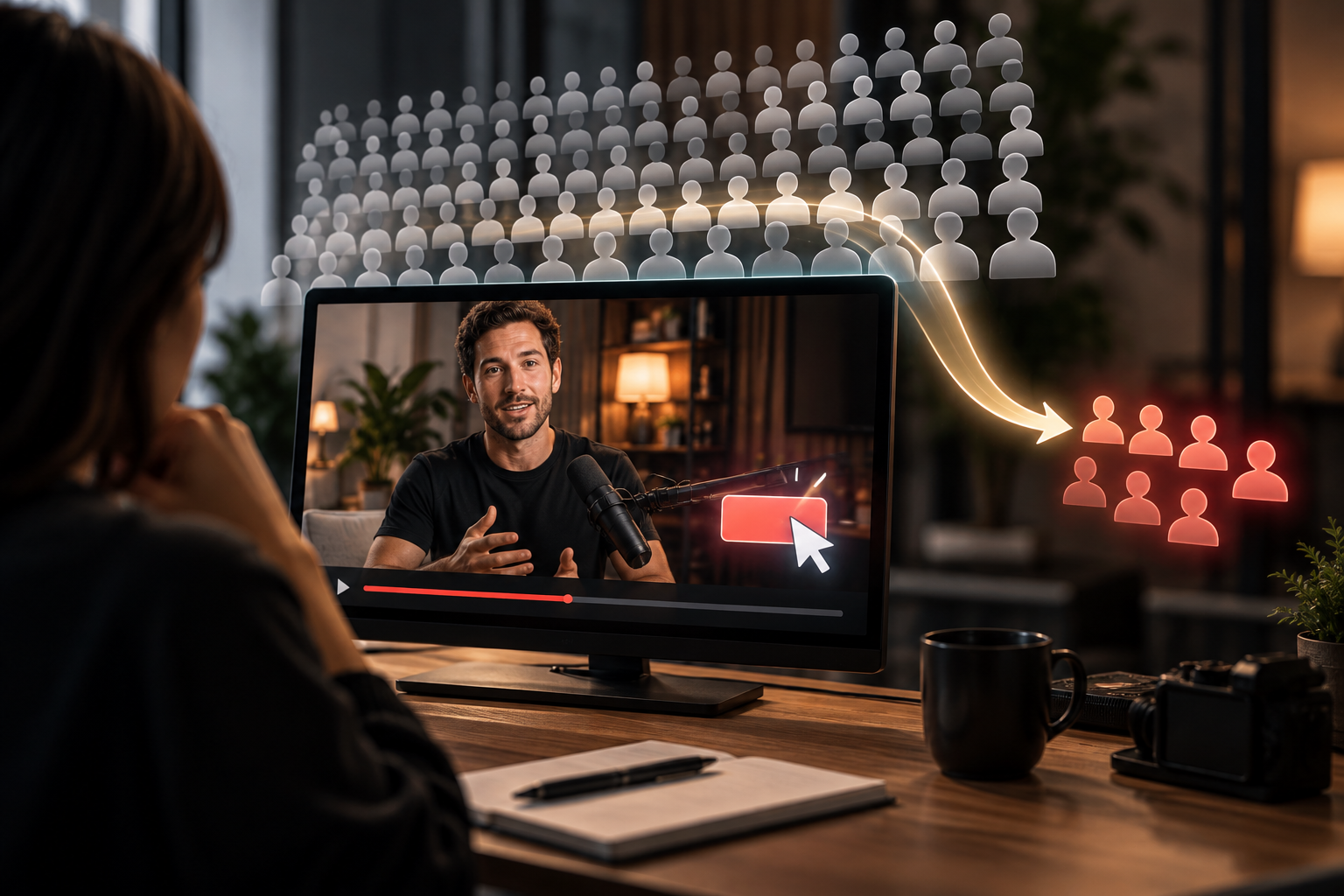
And the cost compounds. Drop-off in the first three seconds isn’t just a lost view — it’s a signal to the algorithm that your content isn’t engaging. The platform pushes it less. Your reach shrinks. All because of something most creators think is a secondary concern.
3. Why Home Studios Often Fail (And It’s Not Your Microphone)
The most common mistake creators make is thinking a good microphone solves the problem. It doesn’t.
A microphone captures everything in its environment. Put a high-end mic in an untreated room and you’ll get a high-fidelity recording of that room — including the reflections off hard walls, the air conditioning in the background, the low-frequency hum from appliances, and the flutter echo between parallel surfaces.
Bedrooms, home offices, and living rooms are acoustic nightmares by design. They weren’t built with sound absorption in mind. Furniture, curtains, and bookshelves create unpredictable reflections. The ceiling and floor create vertical standing waves. The result is a recording that sounds like exactly what it is: someone talking in a room that wasn’t built for recording.
You can hear a home studio. Experienced listeners — and your audience’s ears, even if they can’t name it — pick up on room sound immediately. It’s the thing that separates content that feels professional from content that feels like it was made in a spare room.
The issue isn’t effort or intent. It’s physics. Acoustic treatment requires specific materials, placement, and room geometry to work properly. It’s not something most residential spaces can replicate without significant investment.
4. What Professional Recording Actually Changes
A professionally treated recording space solves the problems home studios can’t — not through better effort, but through better physics.
Acoustic treatment: purpose-built panels, bass traps, and diffusers control how sound behaves in the room. Reflections are absorbed before they reach the microphone. The result is a dry, clean signal with no room coloration.
Professional-grade microphones: studio condensers and dynamics are calibrated for voice capture in a way consumer gear isn’t. The difference isn’t subtle — it’s the difference between your voice sounding present and intimate versus distant and thin.
Controlled environment: no air conditioning noise, no street sounds, no electrical interference. The only thing in the recording is you.
Monitoring systems: professional playback so you can actually hear what’s being captured and make real-time decisions, not discover problems in post.
The combined effect isn’t just cleaner audio. It’s that your audience stops thinking about the sound and starts focusing entirely on what you’re saying. That’s the goal — invisible production that gets out of the way of your content.
5. The Content You Create Deserves to Be Heard
Think about the last piece of content you produced. The preparation behind it — the research, the scripting, the thinking, the time.
Now ask honestly: did the audio do it justice?
If you recorded it in a space with parallel walls, a running AC unit, or a USB microphone on a desk surrounded by hard surfaces — probably not. Your content was filtered through a layer of room noise before it ever reached your audience.
Switching to a professional recording space doesn’t just improve the audio. It changes how your audience receives everything you say. The same words, recorded properly, carry more weight. They feel more considered. More authoritative. More worth listening to.
This isn’t about chasing perfection. It’s about removing the one thing standing between your content and your audience: sound that undermines the message before you’ve delivered it.
6. Who the 3-Second Rule Applies To
The 3-second rule doesn’t only apply to full-time creators. It applies to anyone whose voice carries weight in their work:
Podcasters building audience trust over dozens of episodes — every episode is a first impression for a new listener.
Corporate video producers representing a brand in front of clients, prospects, and investors.
Coaches and educators selling expertise through audio and video — where perceived professionalism directly affects conversion.
Executives and founders building thought leadership on LinkedIn, YouTube, or internal communications.
Sales teams using video prospecting and demo content in high-stakes buying cycles.
Event and conference organisers capturing sessions for replay and distribution.
In every case, the first three seconds of audio determine whether the rest of the content gets a fair hearing. Most of the time, they don’t realise they’re failing that test until the numbers tell them something is wrong.
7. How to Stop Losing Your Audience in Three Seconds
The fix isn’t complicated. It’s a decision.
Record in a space that was designed for recording. Use gear that was designed for professional voice capture. Work in an environment where the only variable is your content — not the acoustics of your spare room.
At Villo Studio, our recording spaces are purpose-built for exactly this. Acoustically treated rooms, professional microphones, controlled environments, and a production team that handles the technical side so you can focus on what you actually came to say.
Whether you’re launching a podcast, producing a recurring video series, filming an executive content programme, or capturing a one-off brand video — the result is audio that clears the 3-second filter every time.
Three seconds is all you get. Make sure the first thing your audience hears tells them you’re worth listening to.
Book a Recording Session at Villo Studio
Ready to stop losing your audience in the first three seconds? Here’s how to get started:
1. Tell us what you’re recording: podcast, video, voiceover, corporate content — contact us at villostudio.com with your project details.
2. Choose your format: single session, recurring series, or a full content production day. We’ll recommend the right setup for your output goals.
3. Come in and record: our team handles the technical setup. You handle the content.
4. Leave with production-ready audio: recorded, mixed, and delivered in the formats you need for distribution.
For recurring programmes — weekly podcasts, monthly executive content, ongoing video series — we offer retainer arrangements with consistent crew and reduced setup time per session.
Ready to Record?
If your content is good enough to make, it’s good enough to sound professional. Villo Studio gives you the space, the gear, and the team to make sure your audience never has a reason to scroll past in the first three seconds.
Visit villostudio.com to book your session or request a custom production proposal.