

It sounds like a small question, but the answer affects both your recording quality and your budget. Book too little and you rush, skip retakes, and leave with a half-hearted recording. Book too much and you pay for empty hours. The trick is to calculate from what you actually need rather than guessing.
1. Start from your finished episode length, not your booking length
A 30-minute final episode is almost never recorded in exactly 30 minutes. There are thinking pauses, stumbles, questions that need repeating, and sections you'll cut in editing. As a rough rule, plan for recording time of about 1.5 times the finished episode length you want.
2. Don't forget setup and sound check time
Before recording starts, there's a guest to welcome, microphones to check, and seating and camera framing to adjust. Set aside around 30 minutes for this. Many people forget it, then are surprised when part of their booking is gone before recording even begins.
3. Add a buffer for retakes and breaks
Reserve an extra 15–30 minutes as a cushion. It rarely feels necessary until you need it: a late guest, an important segment that needs re-recording, or simply a moment to drink water and reset.
The Simple Formula
Booking time = (finished episode length × 1.5) + 30 minutes setup + 15–30 minutes buffer
A few examples:
- 30-minute episode → book about 2 hours
- 60-minute episode → book about 2.5–3 hours
- Batch of three 30-minute episodes in one day → book about 4 hours, including breaks between guests
Consider Batch Recording
If you publish regularly, recording several episodes in one session is usually more efficient. Setup happens once, your look and sound stay consistent across episodes, and you don't have to return to the studio every week.
Practical Takeaway
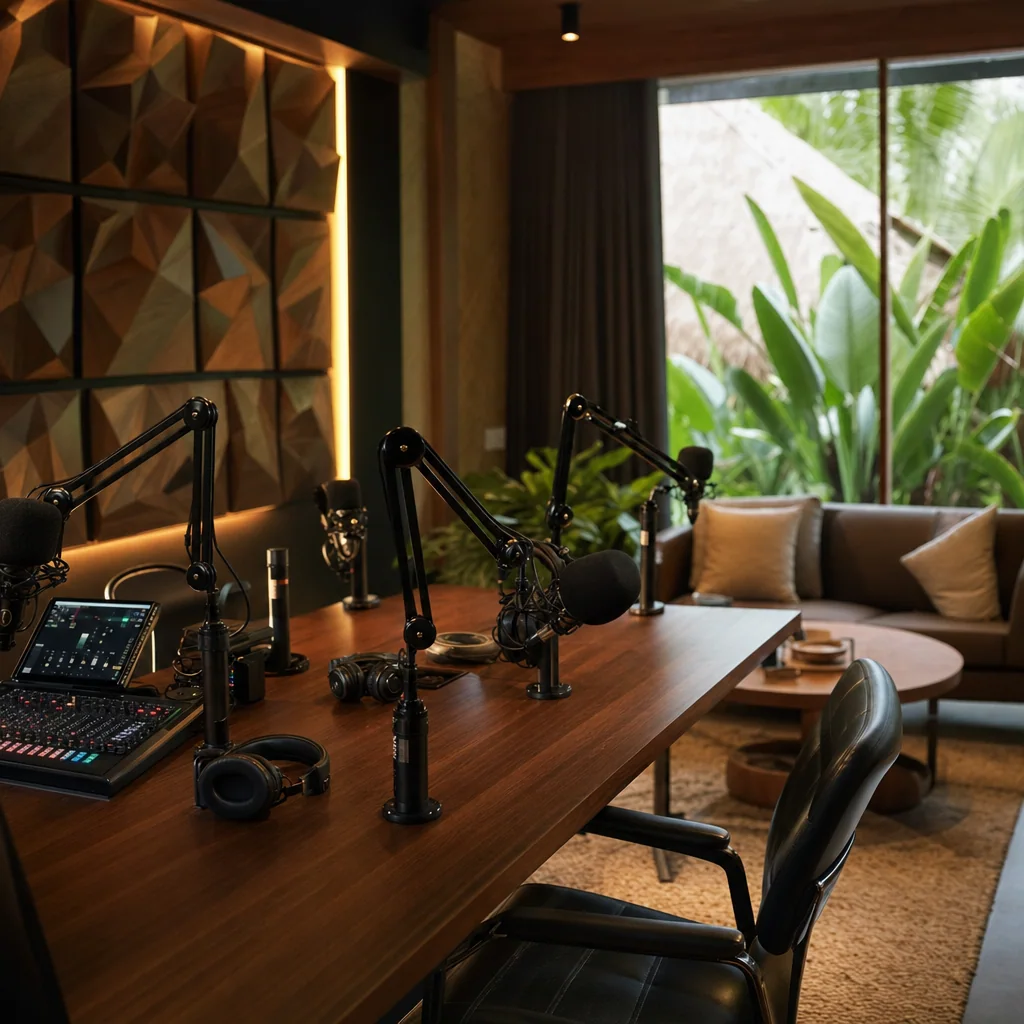
When in doubt, lean slightly longer. The cost of one extra hour is usually far smaller than the cost of re-recording on another day or letting down a guest who made time for you. What If the Studio Crew Handles the Technical Side? Much of the time that "disappears" in a session goes to technical work: positioning cameras, checking audio, confirming framing. At Villo Studio in Canggu, Bali, the multi-camera setup is ready and the studio crew handles switching, framing, and sound engineering. You show up and focus on the conversation, so your booked time goes toward what actually matters.