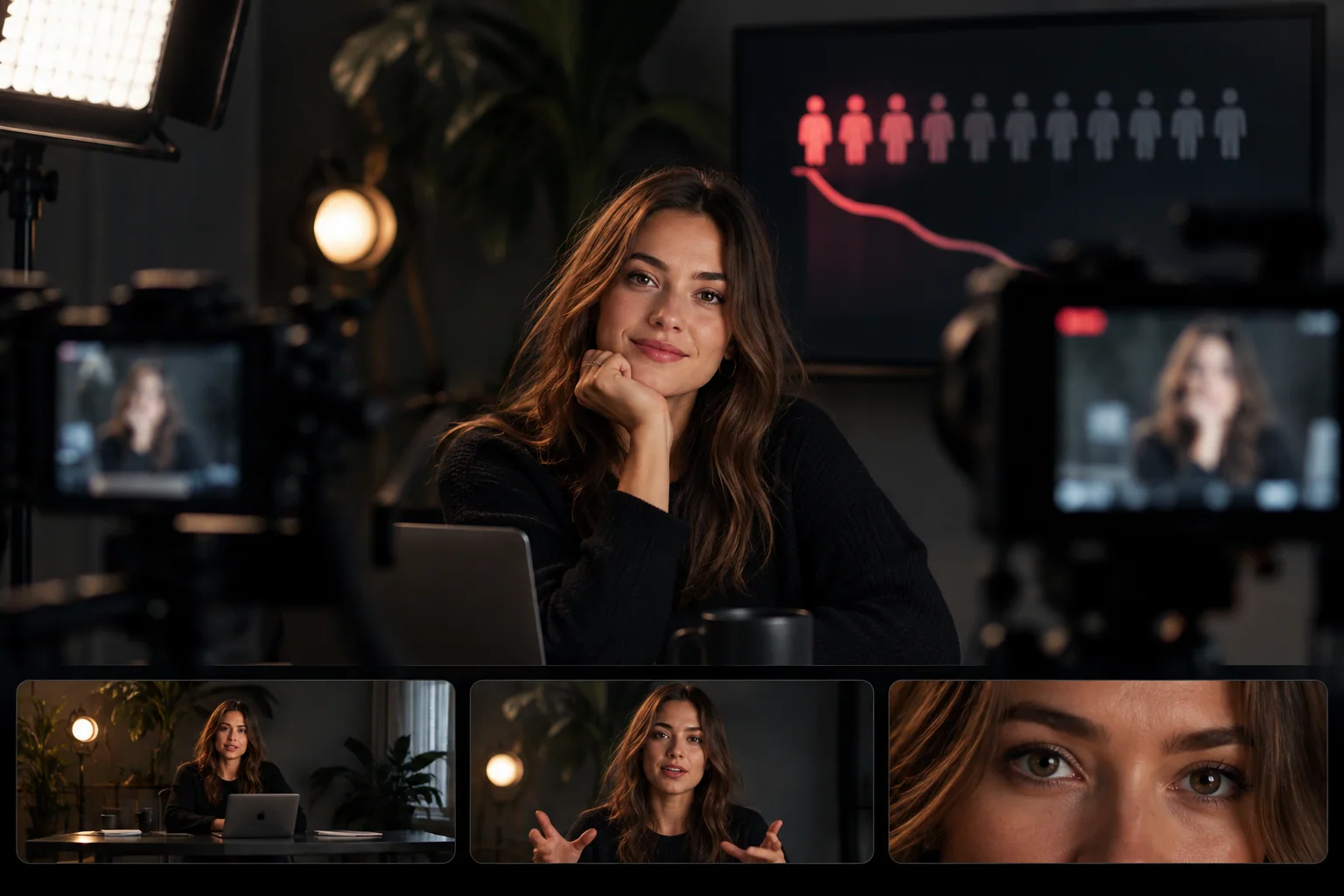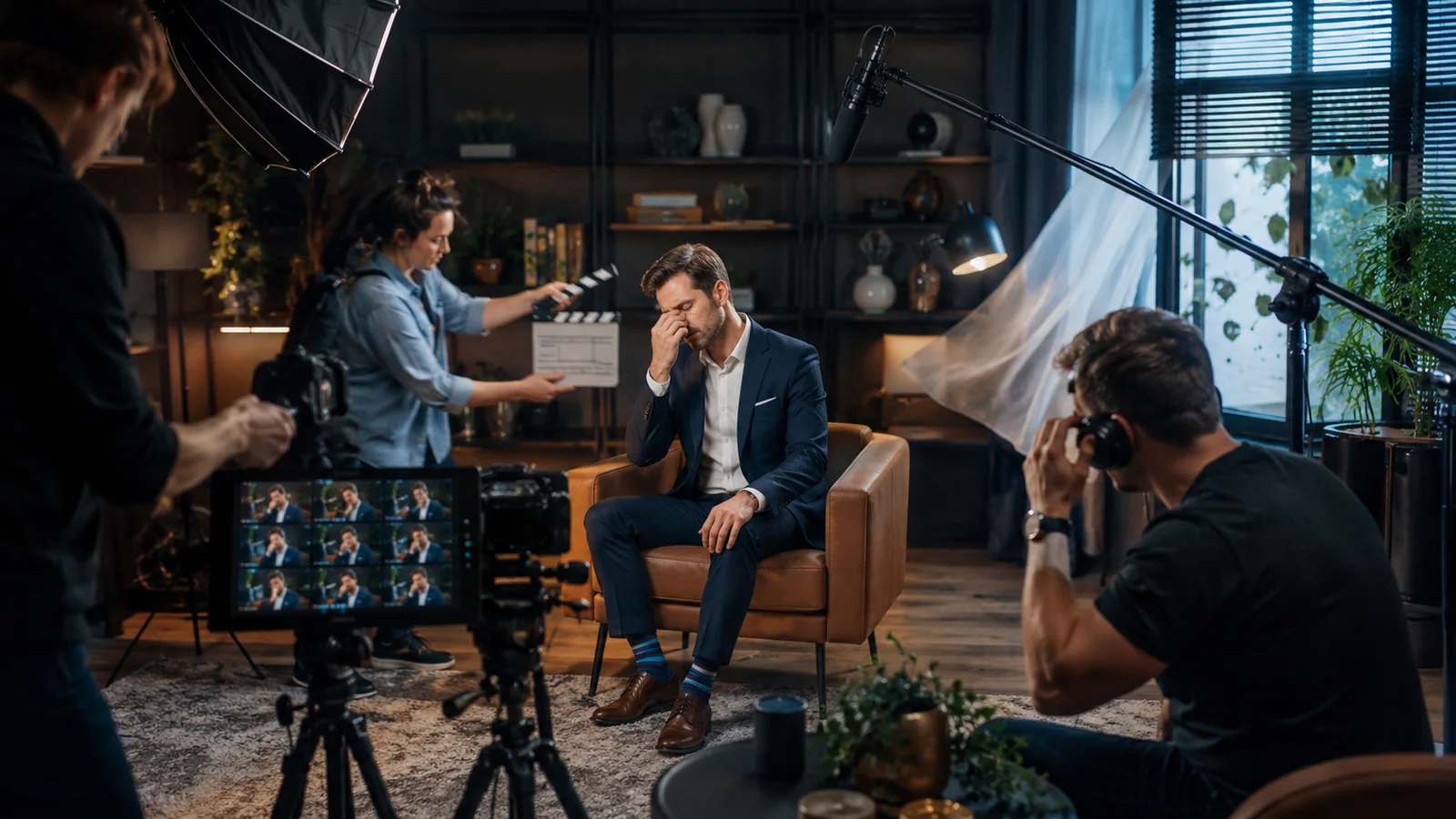


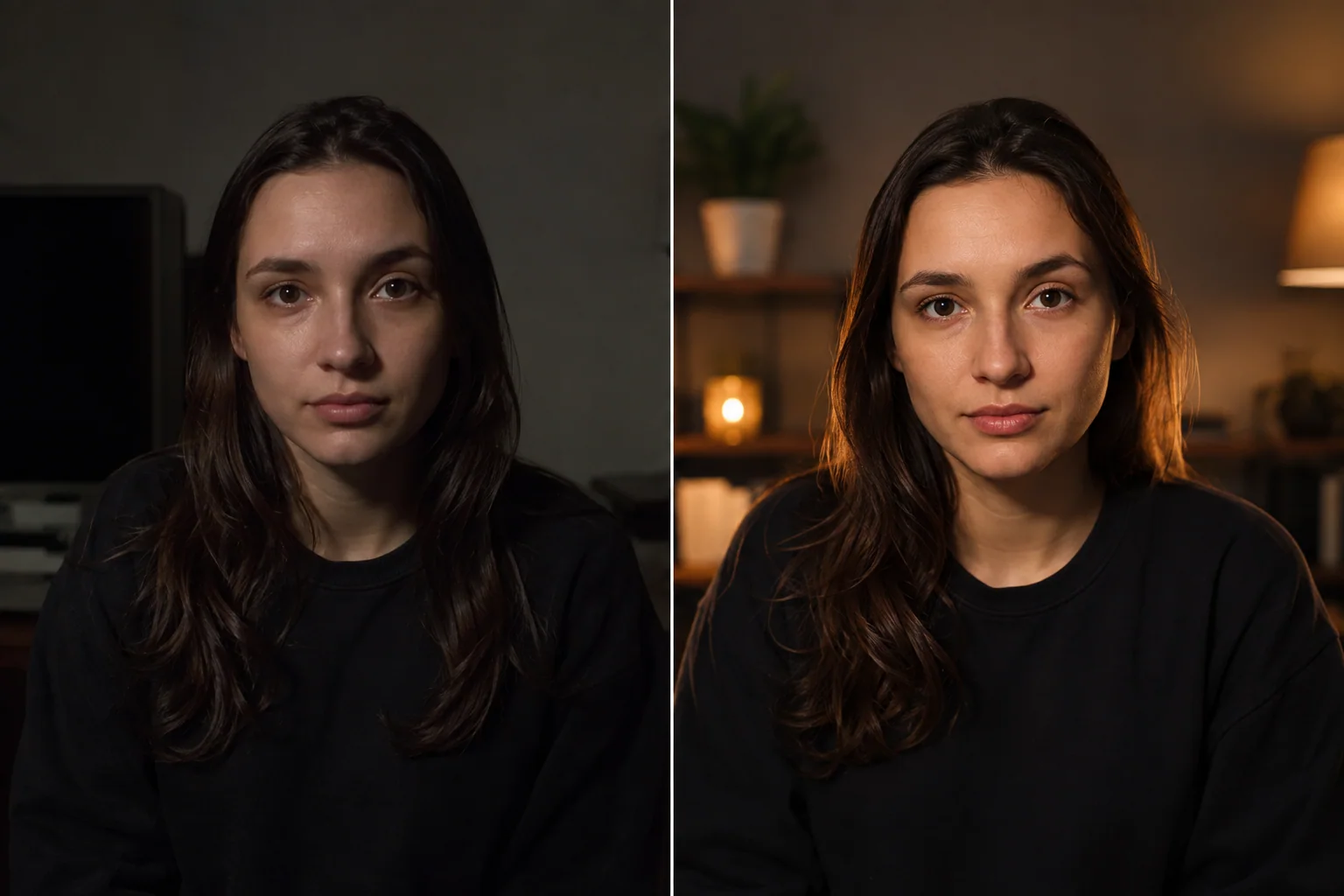
You can’t fix trust in post-production. You can fix lighting before you press record. For business owners, coaches, and consultants who use video in sales and marketing, that one fact might be the highest-return production decision available to them.
Ironically, lighting is often the last thing people think about when making a video — it loses priority to an expensive camera, a good microphone, or a carefully written script. The order should really be reversed. Here’s what the data actually says about video quality, trust, and why lighting carries more weight than most people give it credit for.
The trust problem starts before anyone hears a word
91% of consumers say video quality directly impacts how much they trust a brand — up from 87% two years earlier. That’s not a subtle shift. Low production quality doesn’t just look amateurish; it actively signals unreliability to the person watching.
Lighting is the first visual quality cue a viewer processes, before pacing, before audio, before the content itself has a chance to land. A viewer forms a trust judgment in the first few seconds, and that judgment happens on a face they can — or can’t — clearly see.
Psychologically, this makes sense: the human brain has always relied on reading facial expressions to judge whether someone can be trusted. When a face is hidden in shadow, underlit, or lit unevenly, the viewer’s brain loses most of the information it normally uses to make that call. What’s left is a vague sense that “something feels off” — even if the viewer can’t quite explain why.
Attention has a short runway, and lighting decides whether you keep it
Videos between one and two minutes long average a 56% retention rate, the highest of any length bracket. But that number assumes people keep watching, and well-produced videos are the ones that hold attention long enough to get there. Poor lighting is one of the fastest triggers for early drop-off — viewers don’t consciously think “the lighting is bad,” they just lose interest and leave.
This is sometimes called the “silent drop-off” in video marketing: viewers don’t complain, they don’t leave a negative comment, they just quietly close the tab. That’s dangerous from a business standpoint, because it leaves no clear trail to diagnose — all you see is a low retention number with no obvious explanation, when the root cause might be something as simple as lighting that was never set up correctly in the first place.
People trust faces, not footage
78% of consumers say they trust video featuring real people in well-lit, natural setups over AI-generated or low-quality alternatives. The human face is the trust signal in this equation — but only when it’s actually visible. Flat, harsh, or uneven lighting removes the advantage a real person on camera is supposed to have over synthetic content.
This matters even more today, as AI-generated content becomes more common and audiences get sharper at telling authentic from artificial. A video with a real, clearly lit human face becomes one of the strongest differentiators between a brand that feels genuine and one that feels generic or thrown together.
The retention gap between video and text is real — if the video gets watched
Viewers retain 95% of a message delivered through video, compared to roughly 10% for the same message delivered as text. That gap is one of the strongest arguments for using video at all. But it’s conditional: the retention advantage only applies if the viewer keeps watching long enough for the message to land. Poor lighting breaks that chain early.
In other words, the investment in video as a communication medium only really pays off once the basic precondition is met: the video actually gets watched long enough for the message to come through. Even the best-written script won’t beat that 95% retention advantage if the viewer has already left by second seven because the speaker’s face was too dark to comfortably watch.
The funnel ends at a purchase decision
64% of consumers say they’re more likely to buy a product after watching a video featuring it. Put the five numbers together and a funnel appears: lighting affects trust, trust affects retention, retention affects whether the message is received at all, and that determines whether the video ever influences a purchase. The chain starts at the same place every time — whether the person’s face is clearly lit.
For businesses that rely on video for sales — whether it’s a landing page video, social content for personal branding, webinar material, or testimonials — this funnel runs every single time someone hits play. If the starting point is broken (poor lighting), everything downstream weakens with it, no matter how strong the content or the offer actually is.
The takeaway
None of this requires better cameras, better scripts, or better editing. It requires getting the lighting right before recording starts, because nothing done afterward can undo how a poorly lit face reads to a viewer in the first three seconds. For anyone using video in sales or marketing, it’s arguably the single highest-leverage production investment available — and one of the cheapest to fix.
The good news is that fixing lighting doesn’t take years of technical skill. What it takes is the right setup, a space designed for it, and someone who knows how to shape light so a face looks natural — not overexposed, not lopsided, just clear.
You don’t have to figure out lighting on your own
If you’ve read this far, you probably already know video matters for your business — but figuring out softboxes, angles, and a setup that actually flatters your face takes time (and rarely goes right on the first try alone).
At Villo Studio, professional lighting setups, a ready-to-record space, and a team that knows how to make you look credible on camera are already in place. You just show up and talk to the camera — we handle the rest.