

Every agency page displaying on-site interview video depicts the final image - never the moment fifteen minutes before it, when the office AC noise is picked up by the lav mic and the "ideal lighting" specified in the brief turns into a window causing half the frame to be overexposed. On-site production isn't riskier than studio work because the camera is different. It's riskier because no one informs you about what might break during location shooting, or what the costs are for repairs mid-shoot.
On-site shooting is Villo Studio's highest-priced service, and that premium isn't a margin - it covers the cost of solving problems that a studio solves for free.
What On-Site Interview Video Production Means
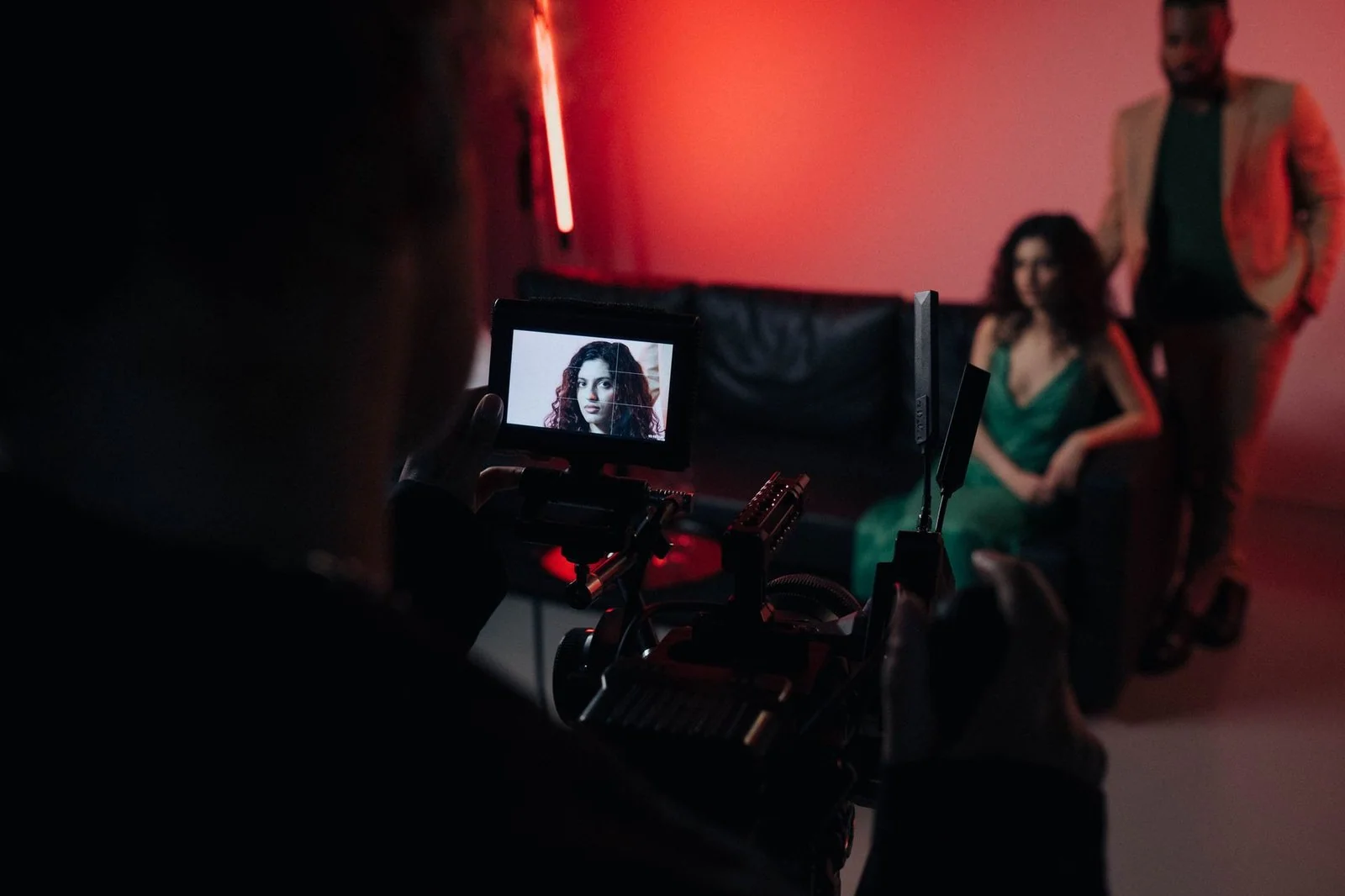
On-site video production for interviews involves filming at an actual workplace setting, such as a company office, factory floor, conference hall, or client site, as opposed to a studio environment. The interviewee is positioned in the room where the real work occurs. Villo Studio's on-site crew brings its own camera, lighting, and audio equipment to the location, rather than requesting the interviewee to travel to Pererenan.
The trade is technical control for authenticity. In a studio, Villo Studio manages all variables: light temperature, room acoustics, background, HVAC noise, and even the chair. On location, you sacrifice most of these controls and gain something a plain background cannot replicate - the actual factory of the CEO, the clinic they constructed, and the team they lead.
Three use cases dominate the on-site interview work conducted by Villo Studio: executive interviews, which showcase the scale and seniority of the office; event coverage in Bali, which exists only because the conference is happening that week; and on-location testimonials, where a customer speaks about how your product benefited their business. The type of location dictates the equipment needed and potential failure scenarios, thus each scenario carries a different risk profile.
The Six-Stage On-Site Interview Workflow
An on-site interview shoot consists of six stages: location scouting, gear and crew planning, on-site setup, filming, wrap and backup, then editing. Villo Studio considers scouting non-negotiable, because every later stage inherits whatever the scout missed. Scouting may involve a physical walkthrough, a set of phone photos with a floor plan, or a 15-minute video call where someone walks through the room while filming.
Location scouting is the step studio shoots skip entirely, and it prevents most on-site failures. When scouting a Bali villa, office, or event space, we assess the direction of the windows and the time they face, the condition of the walls and floors, the equipment or air conditioning operating during business hours, and the necessity of obtaining written permission to enter. Having these four details resolved beforehand ensures that the shoot day is not left to chance.
A typical on-site location requires half a day to a full day for filming, despite the interview itself lasting only a modest stretch of time. This additional time is needed for setup, such as loading equipment, setting up lighting, conducting an audio check in the actual room, and multiple takes once the subject is comfortable. Plan for the entire day, not just the interview duration: three subjects at one site can be managed in that time, but three subjects at three different sites would not fit.
Studio vs. On-Site: Consistency vs. Context
Choose between studio or on-site recording by considering the nature of your video: does it focus on consistency, or does it require specific context? Villo Studio operates both setups - our Pererenan studio handles multi-camera sessions, and we also offer mobile services for on-site projects - so this is a decision rule, not a pitch for one format.
Studio succeeds when uniform lighting and audio quality across multiple interviews matters more than setting. A campaign that incorporates eight executives into a single three-minute video requires each subject to be lit identically and recorded at the same noise level, or the edit looks stitched together from eight different companies. Villo Studio's studio ensures this consistency by default: the same room, the same key light, and the same microphones are used, whether you shoot eight people in a week or over three months.
On-site shots are effective when the location is part of the message. A founder at their factory, a doctor in their clinic, or a team during an event - such scenes carry information no studio backdrop reproduces, and they are perceived as proof rather than production. If the video's claim would be weakened by removing the background, filming on location is advisable.
Most productions choose a location first and then create a controlled setup within it: a quiet corner room instead of an open-plan floor, a portable backdrop against a bad wall, and an interview scheduled for the two hours when the window light is soft rather than direct. This contingency plan is determined during the location scout, not at 9am on shoot day, and it preserves the location's authenticity without inheriting its problems.
The On-Site Gear Checklist
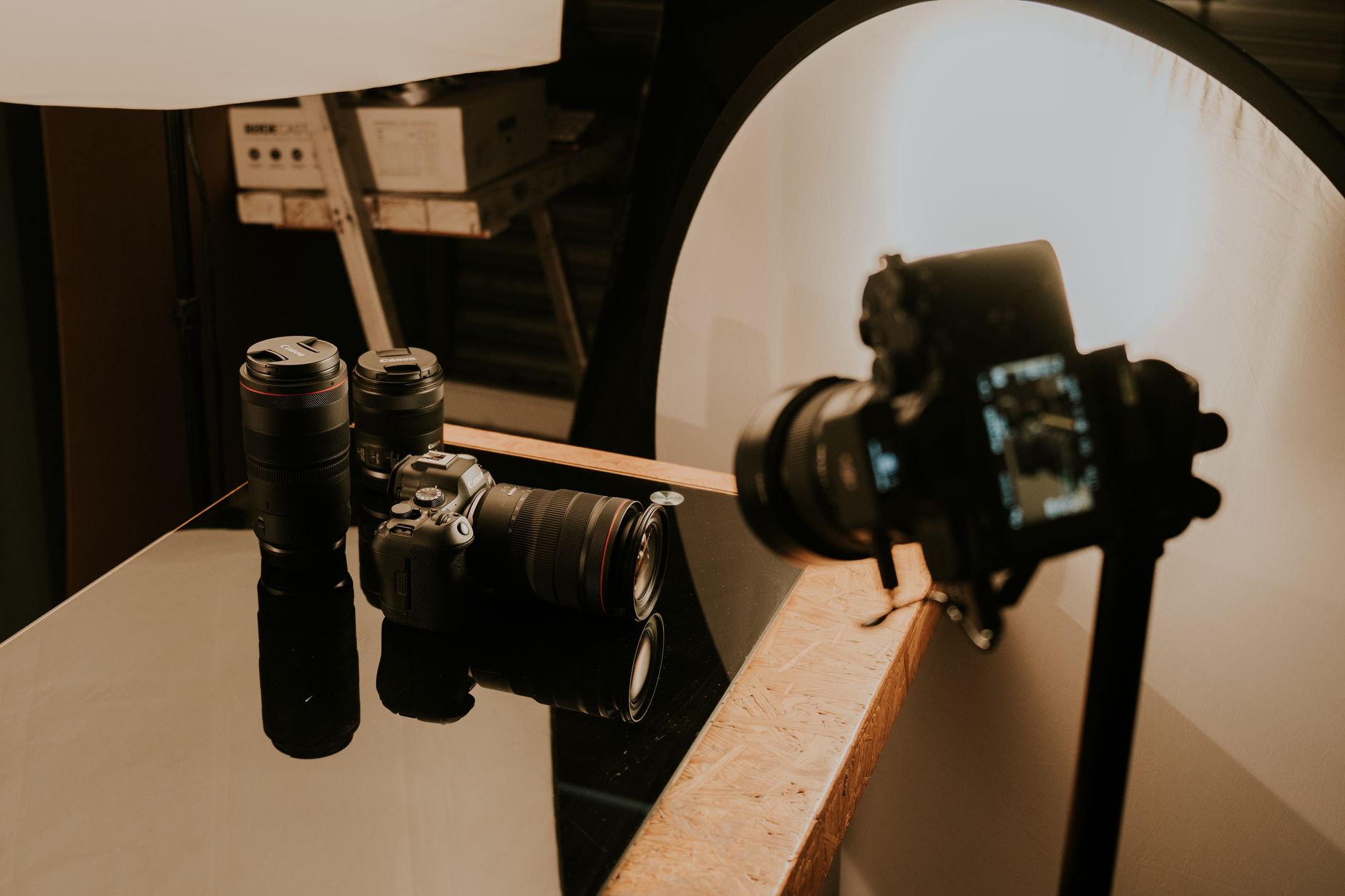
A minimum viable on-site interview kit comprises four elements: a wireless lavalier mic for each subject, a battery-powered portable lighting setup featuring a key light and a fill light, a tripod or gimbal, and an independent backup audio recorder running separately from the camera. Villo Studio's on-site crew always brings all four items to every booking - the fourth is the one clients are surprised by.
Camera audio is the single most-skipped redundancy on self-shot productions, which is why Villo Studio runs a backup recorder on a separate path from the camera. If a wireless lavalier mic drops out for a few seconds during the best answer of the interview, it cannot be remedied in post-production if nothing else was rolling. However, with a second recorder in place, that gap becomes a routine synchronization task in editing - the cheapest insurance in on-site production and the most commonly skipped.
A lav mic sits inches from the mouth and rejects most of the room, which is why Villo Studio uses one wireless lav per subject instead of sharing a single mic. A boom or camera mic in an open-plan office captures the room's reflections along with the voice, causing unwanted bleed that makes the footage sound like it was recorded in a corridor. For podcast-style interview setups with two or more people talking over each other, per-subject mics stop being optional: you need separate tracks to fix overlap at all.
The portable lighting kit exists to override whatever the room is doing, not to add polish. Real locations blend natural daylight through windows with overhead fluorescent lights, and the mix varies as the sun moves. Controlling key and fill lights gives one consistent look from the first take at 10am to the last at 4pm. Battery power matters more than wattage on location, because the good spots in the room seldom have a free socket.
Gear scales along two axes, and both affect costs. The number of microphones scales per subject - having four people on camera requires four wireless channels and four audio tracks for monitoring. Lighting scales per site, as a second location necessitates duplicating the equipment or dismantling, transporting, and setting up again. These two multipliers set crew size, and crew size sets your budget.
Five Failure Points That Wreck On-Site Interviews
Five aspects break on-site interviews: room acoustics, mixed lighting, HVAC and background noise, access permissions, and a single audio path with no backup. Villo Studio has hit all five at genuine Bali locations - villas, coworking spaces, hotel conference rooms, and a warehouse in Kerobokan. Each is preventable during the scout and expensive to fix after shoot day.
1. Room acoustics
Bad room acoustics is the most frequent on-site issue and the least visible on the day. Surfaces like hard walls, tile or concrete floors, glass partitions, and open-plan layouts reflect sound back into the mic, and your ears filter that out live while the recording does not. Villo Studio identifies this by clapping once in the center of the space during the scout; if the clap rings, the room rings. The fix is proper microphone placement plus a smaller, softer room: carpet, curtains, a bookshelf, or a sofa placed against the reflective wall.
2. Uncontrolled and mixed lighting
Mixed colour temperature is the failure that shows up as a colour-correction bill. A typical Bali office has daylight coming through the windows at a notably cooler colour temperature than the overhead fluorescents around 4000K, and a subject lit by both goes green on one side of the face and blue on the other. Villo Studio's portable key and fill override the ambient lighting rather than blending with it, and we turn off the overheads wherever possible. Direct sunlight through glass is even worse because it moves, so a take at 9am and a take at 3pm won't match.
3. HVAC and background noise
AC hum, open-plan chatter and traffic get caught by listening during the scout, not by looking. Villo Studio's scout includes standing still in the room for sixty seconds with everything running as normal - AC on, staff at desks, the road outside doing what it does at that hour. A villa that's silent at 8am can be a scooter highway at 11. If the AC can't be switched off, you shoot in a different room or accept a noise floor you'll never fully remove.
4. Permits and access
Access permission is frequently the deciding factor between a successful shoot and a cancelled morning. Corporate offices generally only require internal sign-off, since the client controls the building. For public spaces, hotels, coworking venues, and any third-party locations, written permission must be arranged in advance. Villo Studio confirms who provides this sign-off during the scouting process, not on the day of the shoot - rules vary by venue and by regency in Bali, so it's best to ask the venue manager directly and get the answer in writing.
5. A single audio path
Relying on camera audio alone turns a fixable glitch into a reshoot. A lav battery dying, a wireless channel being interfered with by the venue's own system, or someone knocking a mic against a collar - none of these are uncommon, and all are survivable if a second recorder was rolling. Villo Studio runs a backup recorder on every on-site booking for this reason alone. Count your audio paths before you roll: if the answer is one, you don't have a recording, you have a hope.
Budget Ranges by Crew Size
On-site interview video production costs $600-1,500 for a half day and $1,200-3,000 for a full day at 2026 videographer rates, with specialists such as drone or cinema-camera operators adding $200-500+ per hour (Vidico, 2026). These bands move with crew size rather than shoot length - use them to sanity-check any quote before comparing vendors.
A one-person, single-camera setup sits at the bottom of that range. One operator manages the camera, lav mics, a two-light kit, and a backup recorder - workable for one subject, one room, and a straightforward talking-head deliverable. A solo operator cannot monitor four audio channels and reframe two cameras at once, so this tier suits one person speaking to camera for a short segment.
A multi-camera shoot with a dedicated audio operator and lighting tech pushes toward the top of the $1,200-3,000 full-day band. Three crew members means someone watches levels while someone else fixes a light and the camera operator frames the shot - parallel attention during a session you can't repeat. Add a specialist at $200-500+/hour (Vidico, 2026) for drone exteriors or a cinema camera on a brand film.
Multi-location shoots multiply the day rate per site rather than averaging it down. Two offices in Bali means two load-ins, two lighting setups, two audio checks, plus the transit between them - not one and a half days. Sequencing three subjects at one location instead of across three locations is the single biggest cost lever you control.
Full Production Support at Villo Studio Bali
On-site interview video production at Villo Studio comes as one booking covering crew, gear, and edit, rather than three vendors you coordinate yourself. This service includes the mobile crew, transportation, full equipment, and post-production, not just a camera operator arriving with a bag.
Bundling removes the coordination cost the day-rate model hides. Sourcing separately means finding a freelance videographer, then an audio operator free the same day, then an editor who wasn't on set and has to be briefed on footage they've never seen. Villo Studio's Bali production team works in English, Russian, and Indonesian - which matters when you're directing a nervous CEO in their second language.
Testimonial videos increase conversions by up to 80%, and 77% of viewers say a testimonial video convinced them to buy (Famewall, 2026). A customer interview recorded in a ringing conference room with clipped audio doesn't convert at 80% of anything. Treat the shoot as a revenue asset, not a calendar problem to survive.
FAQ
What is on-site video production?
On-site video production means filming at a real working location - an office, factory, event venue, or client premises - instead of a controlled studio. Villo Studio's on-site crew brings camera, lighting, and audio kit to the location, so the subject appears in the environment that gives their story context.
How much does on-site interview video production cost?
On-site interview video production costs $600-1,500 for a half day and $1,200-3,000 for a full day at 2026 videographer rates, with specialists such as drone or cinema-camera operators adding $200-500+ per hour (Vidico, 2026). Villo Studio's on-site sessions include crew, gear, and editing.
Is on-site or studio better for interview videos?
Studio is better when consistency matters; on-site is better when context matters. Cutting several interviews into one film needs the controlled conditions of a studio, ensuring identical lighting and noise floor across every subject. When the location itself proves the story - the founder's factory, the doctor's clinic - shoot on-site. Villo Studio runs both, so the answer depends on your edit, not the vendor.
What equipment do you need for an on-site interview shoot?
The minimum on-site interview kit is a wireless lavalier mic for each subject, a battery-powered portable lighting setup with a key and a fill light, a tripod or gimbal, and a separate backup audio recorder running independently of the camera. Villo Studio carries all four on every on-site booking - the backup recorder is the item most often skipped and the one that saves the shoot when the primary audio path fails.
How long does it take to film an on-site interview?
A single on-site interview location typically takes half a day to a full day, even though the interview itself may run for well under an hour. The rest goes to load-in, lighting setup, an audio check in the actual room, and multiple takes. Villo Studio plans by the location, not the interview length: three subjects at one site fit in a day, three subjects at three sites don't.
Can you do multi-location interviews in one production?
Yes - Villo Studio does this regularly, but each location adds a full setup cycle, so budget per site rather than expecting a volume discount. Every new site means another load-in, lighting build, and audio check, which is why day-rate cost multiplies across locations rather than averaging down (Vidico, 2026).
Book your on-site interview shoot
Tell Villo Studio where the shoot is, how many people are on camera, and what the footage has to do. We'll come back with the crew size, kit list, and scout plan for your specific location. Start here: on-site interview video production with Villo Studio Bali.