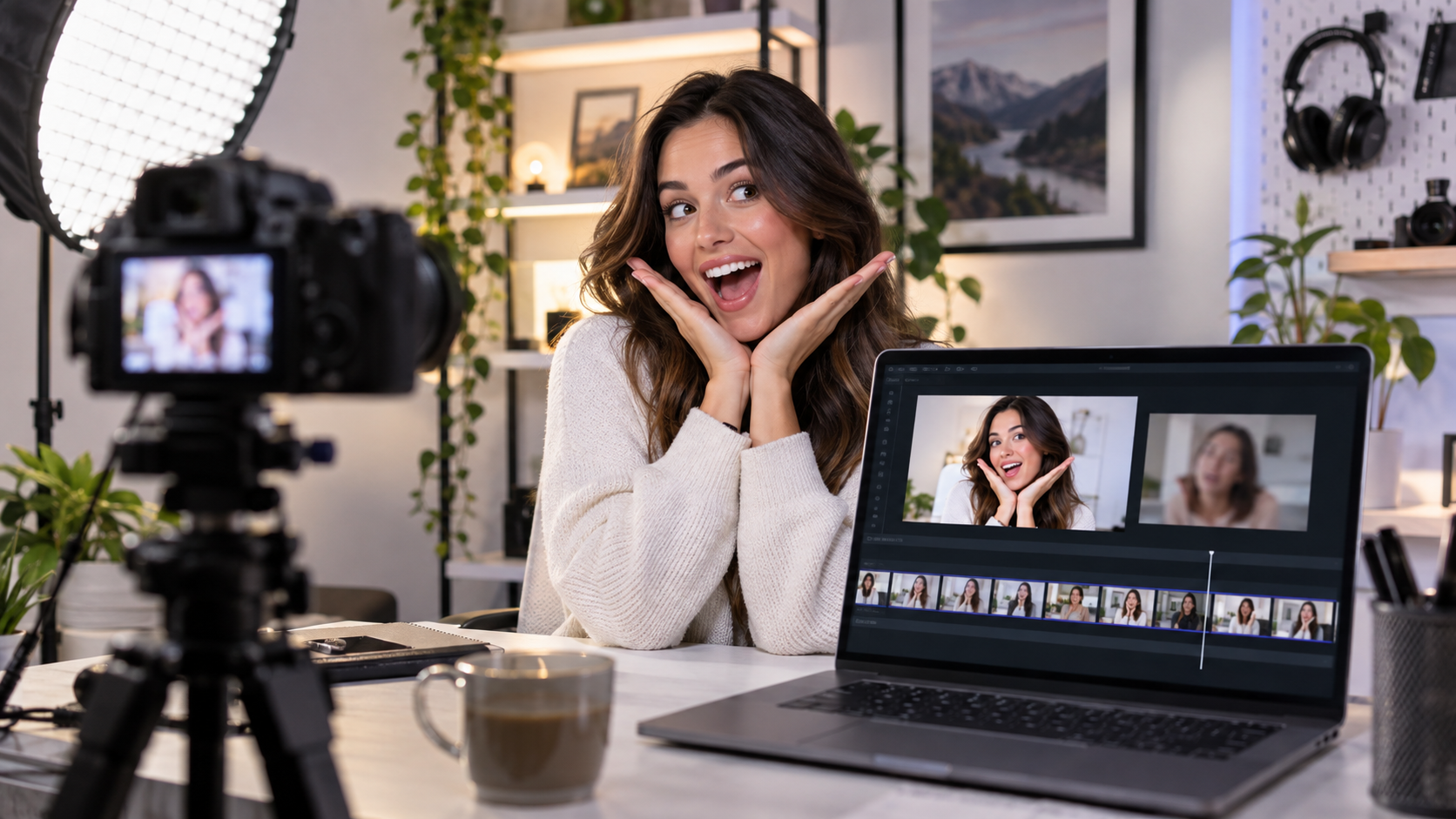


Most people treat B-roll as decoration: a few pretty cutaways laid over the talking head so the edit doesn't feel bare. But B-roll is better understood as a retention tool. Its job is to keep the viewer watching a little longer, and "a little longer" becomes a surprisingly large number once you multiply it across your audience.
What B-Roll Actually Does
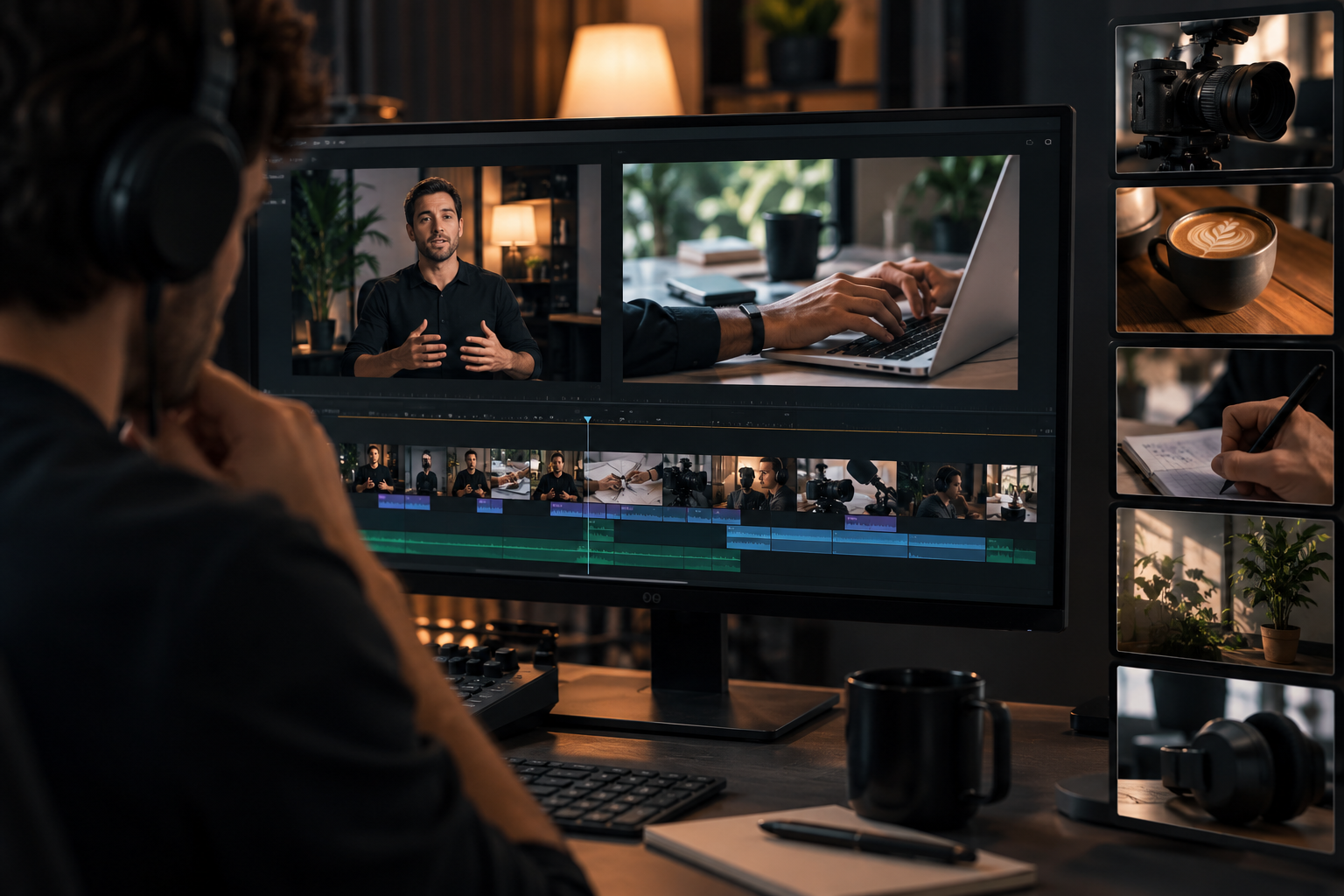
B-roll is any supporting footage that cuts away from your main shot: hands on a keyboard, a whiteboard, a product in use, a wider view of the room. When a talking-head shot runs unchanged for too long, the picture stops giving the viewer anything new, and attention starts to drift. A well-placed cutaway gives the eye something fresh at exactly the moment it would otherwise wander, then returns to the speaker with attention reset.
The Math Behind "Extra Seconds"
Here's the simple way to think about it. Suppose B-roll keeps the average viewer watching 4 seconds longer through a given stretch of your video. That sounds trivial. But across 100 viewers, it adds up to 400 extra seconds of watch time, almost 7 minutes, from a single edit decision. Across a library of videos and thousands of views, the gap becomes significant.
Note: the 4-second figure is purely illustrative to show the arithmetic. Your real number depends on your audience, topic, and editing, and the only reliable way to know it is to measure it.
How to Measure Your Own Number
- Open the audience retention graph for a video in your platform's analytics.
- Find a stretch of talking head with no cutaways, and a comparable stretch that uses B-roll.
- Compare how steeply the retention line falls in each section.
- Repeat across several videos before drawing conclusions, since one video can be a fluke.
That comparison is your real "extra seconds" figure, and it's far more persuasive than any generic benchmark.
Where B-Roll Works Hardest
- Right after the hook, where early drop-off is steepest.
- During explanations, when a visual can show what you're describing.
- Whenever a single shot has run too long, as a quick visual reset.
- At key claims, where illustrating the point makes it more convincing.
Use it with purpose. Cutaways that have nothing to do with what's being said feel like filler and can hurt more than help.
Practical Takeaway
B-roll isn't a finishing touch you add if there's time left over. It's one of the cheapest ways to protect attention across every video you publish, and it pairs naturally with dynamic framing: varied angles and well-chosen cutaways keep the picture moving so the message can land.
Make Variety Easier at the Source
Good editing is much easier when you have varied footage to work with in the first place. At Villo Studio in Canggu, Bali, the multi-camera setup gives you wide and tight angles of the same conversation to cut between, with a studio crew handling the framing and sound, so you walk into the edit with more than a single static shot.