

Bali-based webinar production services built for global audiences
The market for live business webinars has shifted. Course creators, B2B founders, and SaaS marketing teams are running global launches at 9 PM Berlin time, midnight in Moscow, or 8 AM Los Angeles — and they need webinar production services that can be live, on-camera, and mistake-proof at those exact hours. For hosts based in or relocating to Asia, a Bali studio with late-evening slots is one of the quietest power moves in the industry right now.
We work with founders who run weekly product demos to enterprise buyers in three time zones. We work with course creators who do six-figure launches with their audience watching from Berlin, Moscow, and Tel Aviv. We work with B2B marketers whose pipeline depends on a Tuesday 8 PM CET webinar that has to land — every single time. This guide is for them, and it’s also for you if you’re trying to figure out whether running your next live event from Bali is a fit.
Why hosts are running webinars from Bali in 2026
Bali sits at UTC+8. That timing is what most planners overlook. If your audience is in Western Europe, your 8 PM CET webinar starts at 2 AM Bali time — a tough slot. But if your audience is in Eastern Europe, the CIS region, or you’re courting the early US East Coast morning slot for a B2B launch, suddenly Bali times line up cleanly. A 9 PM Bali start is 3 PM in Moscow, 4 PM in Tel Aviv, 8 AM in New York. The math works.
Beyond timing, the production economics are compelling. A live broadcast setup in London or New York with a producer, two cameras, an audio engineer, and a streaming tech runs into four-figure territory per session. The same package — same equipment quality, same level of human oversight — runs at roughly a quarter of that in Bali. You’re not paying for the city. You’re paying for the camera, the crew, and the connection.
Then there’s the lifestyle reality. Most of the founders we work with are already splitting their year across two or three locations. Bali isn’t a relocation question for them — it’s a workflow question. They’re already here for two months, and they have one big launch in that window. Booking a webinar production company that’s local, English-speaking, and has the right equipment removes the last excuse to push the launch back another quarter.
What webinar production services actually include
A lot of “webinar production” pitches online turn out to be glorified video conferencing setups. A real webinar production service covers three distinct phases. If a vendor only handles one or two of them, you’re going to be stitching the rest together yourself on the day — which is exactly when you don’t have spare cycles.
Pre-production
Pre-production is where most launches fail before they air. It includes a script or run-of-show document, a tech rehearsal where you actually speak through your slides at delivery pace, mic and camera tests in the actual studio, and a backup plan for the most common failure modes (audio dropout, slide deck refusing to advance, second host losing connection). At Villo Studio we run a 30-minute tech check before every webinar booking. It catches problems that would otherwise show up six minutes into your live event.
Live production
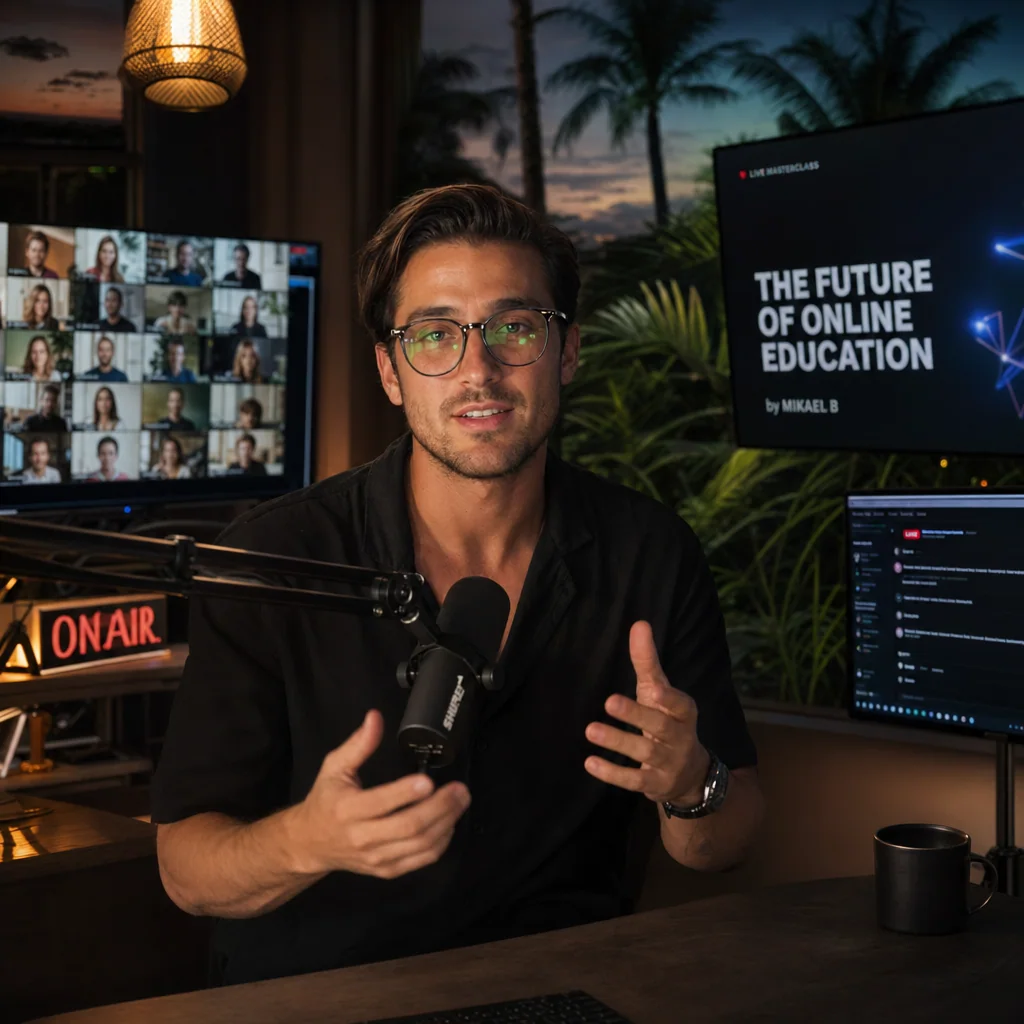
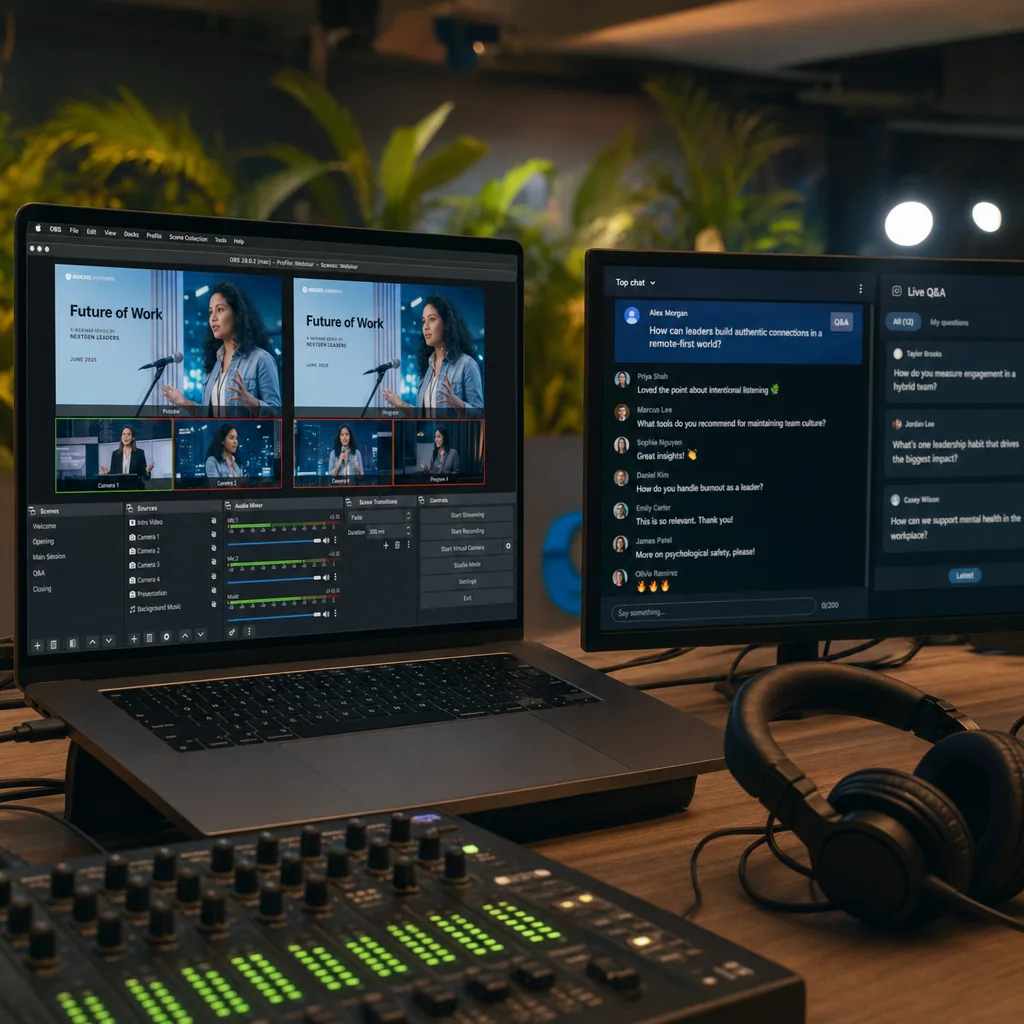
Live production is the visible part. Two or three cameras, a switcher to cut between them, a separate audio path for the host and guests, a streaming encoder pushing to YouTube Live, Zoom Webinars, Restream, or a custom RTMP destination. A producer watching the live audience chat to flag questions, a tech monitoring the stream health, and someone with their hand on a backup connection in case the primary internet drops. None of this is exotic — but it’s all of it together that makes the difference between a polished show and an embarrassing scramble.
Post-production
Post-production starts the moment the stream ends. You want a clean master file, ideally with separate audio tracks for each speaker so you can fix levels later. You want a recap reel cut to two or three minutes for social. You want a podcast-format audio version. You want short clips of the strongest moments for paid retargeting. Our short-form video editing service handles this whole back end, so you walk out of the studio with the live event done and the asset library already in motion.
Webinar production control desk with live streaming software at Villo Studio Bali
Choosing a webinar production company: a practical checklist
Most webinar production companies look fine on a website. The hard differences show up the morning of your launch. Here’s what we’d tell a friend to ask before booking, regardless of who they end up working with.
Internet that won’t drop mid-launch
Ask for the actual upload speed in the studio, not the marketing number. A real live streaming studio runs on a dedicated business fiber connection of at least 100 Mbps upload, with a backup 4G or 5G failover that switches automatically. We run gigabit fiber with a bonded backup. If a vendor can’t tell you what their failover plan is, that’s the answer.
Crew available when your audience is
Most studios on Bali close at 6 PM. That’s fine for a daytime podcast. It’s useless for a 9 PM webinar to a European audience. Ask explicitly: can you book the studio for evening or late-night slots? Is there a surcharge? Will the same crew be there, or junior staff? At Villo Studio, late-evening webinar slots are a default offer, not an exception — that’s a deliberate part of how we serve the global-audience segment.
Equipment that’s truly live-grade
Streaming-grade equipment is different from podcast-grade equipment. A great podcast studio might have stunning microphones and beautiful lighting but a single network connection and no encoder. For live streaming production studio work you need a hardware or robust software encoder (we use Blackmagic ATEM Mini Extreme), latency-managed cameras, and a tested backup audio path. Ask what they stream with. If they can’t name the encoder, they’re improvising.
A crew that speaks your audience’s language
This one matters more than people expect. If your webinar producer can’t follow your script in real time and flag where the cue is going wrong, you lose the safety net. Our crew runs sessions in English and Russian — which means whether you’re presenting to a US audience or a CIS one, the producer in the room understands what you’re saying and can adjust on the fly.
Why webinar production isn’t the same as a podcast or talking-head shoot
A podcast or talking-head shoot is forgiving. If you flub a line, you say it again. If a cable comes loose, you stop, fix it, restart the take. The deliverable is a polished cut that gets edited later.
A live webinar gives you exactly zero of those affordances. Whatever happens, your audience is watching it. The producer’s job is to absorb every small problem before it becomes a visible one. The streaming setup needs failover already running, not failover you’ll set up if something breaks. The audio path needs separate channels so a single bad microphone doesn’t take down the whole audio. This is why we treat webinar production as a different service line, with different equipment and different staffing, even though it happens in the same physical studio.
If you’re new to live streaming, our short read on what to do before you press record is a useful warm-up — many of the same prep habits apply, just tightened up further.
What does professional webinar production cost in Bali?
Pricing for webinar production services in Bali tracks the equipment and crew you actually need. A typical 2-hour live session at Villo Studio runs in the $200–$300 range and includes the studio booking, two-camera setup with a switcher, a producer in the room, audio engineering, the live stream feed to your destination of choice, and the recorded master files. Add-on options include a second host position, additional cameras for guest interviews, post-production highlights, and a podcast-format audio cut.
For founders running a series of weekly webinars, package bookings work out cheaper than booking each session individually — and they guarantee the same crew shows up each time, which matters more than you’d think when you’re trying to ship a product launch sequence on schedule.
Get your next webinar produced in Bali
If you’re planning a launch, a recurring B2B series, or a one-off live event for an international audience, the team at Villo Studio handles the production end-to-end. Book a free 15-minute consultation through our webinar production services page and we’ll walk you through which slot, which crew configuration, and which streaming setup makes sense for your specific event. Most of our clients book the studio twice — once for a tech rehearsal, once for the live event — and that’s usually enough to take a high-stakes launch from anxious to handled.