
Home / Tax Obligations in Indonesian Real Estate Transactions: What You Need to Know Before Buying or Selling
Buying and selling residential and commercial properties are transactions inherently tied to tax payments. Non-residents and foreign investors unfamiliar with this process often find it difficult to navigate the complexities of tax legislation. That is why we have prepared this guide on how real estate transactions work in Indonesia, along with comprehensive information about the taxes associated with buying and selling property.
When purchasing real estate in Indonesia, both the buyer and the seller are required to pay taxes. Each party to the transaction must pay a specific amount.
Any real estate property is subject to this tax: finished residential or commercial premises, as well as land plots. The current rate in Indonesia is 5%, calculated based on the assessed value of the property being purchased.
This refers to the capital gains tax. In accordance with Indonesian Law GR 34/2016, the income tax rate depends on the type of property being sold:
Income tax in Indonesia is calculated based on the transaction value or the assessed value of the property. Understating the transaction price is not recommended, as the higher value is always used for calculation purposes.
The property acquisition tax is payable whenever ownership changes hands — whether through inheritance, sale, or donation. The following forms of ownership fall under this tax:
This tax does not apply to long-term lease extensions. However, once the maximum lease term expires, the investor will need to pay the acquisition tax again. For example, the maximum duration of a foreign investor’s exclusive right to use land held under Hak Milik (specifically Hak Pakai) cannot exceed 80 years.
Registration of a sale and purchase agreement with a notary is only possible after the income tax has been paid. Notary services represent a significant expense, which is shared between the parties to the transaction. Typically, a notary charges at least 1% of the property’s sale price for registration.
Property ownership in Bali is also associated with other taxes. The total amount of taxes payable depends on how the owner plans to use the residential or commercial property.
Investors planning to earn income from real estate in Indonesia are required to pay rental tax. The tax base is the income received from rent. The rate depends on the investor’s legal status:
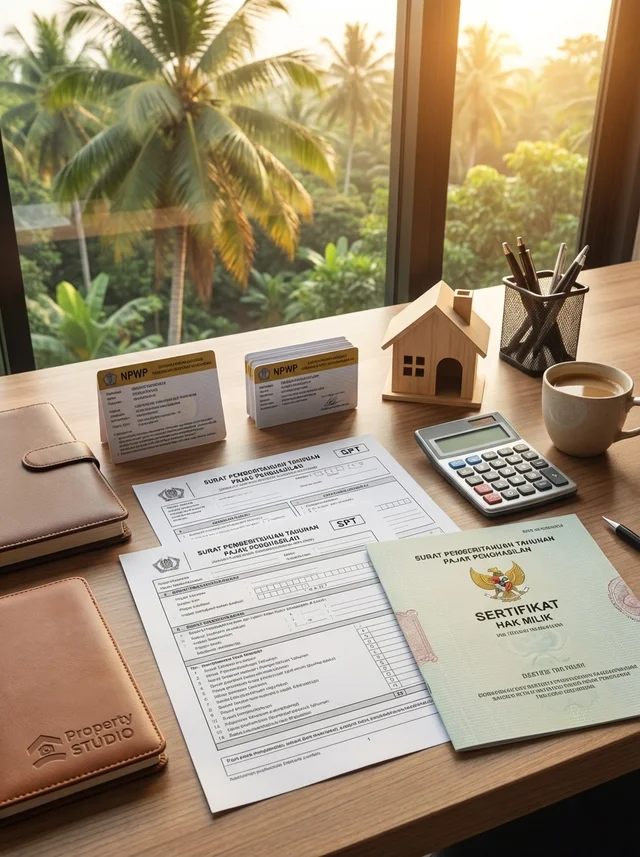
Tax residents in Indonesia are individuals who reside in the country for at least 183 days per year. However, this is not the only requirement. To obtain tax resident status, you must acquire a residence permit (KITAS or KITAP), register with the tax office, obtain an NPWP, and file tax returns on time.
This is an annual payment, the amount of which depends on the property’s value:
Indonesia also has a construction tax that must be paid upon completion of construction work. The taxpayer is the party that carried out the construction. If the project was funded by private investment, the obligation to pay this tax falls on the individual. The construction tax rate is 2% of the construction budget.
Investors planning to purchase property in Bali or any other city in Indonesia are advised to familiarize themselves with the country’s tax legislation in advance. You can verify current tax rates through government agencies, but the best option is to consult a lawyer who can explain which property taxes need to be paid when buying or selling a specific property.
Villo Studio — a video production studio in Canggu, Bali. We help businesses create professional podcasts, social media videos, product photography, and creative content.
villostudio.com | Canggu, Bali