

Bali is known not only for its breathtaking landscapes and rich culture, but as the region with the largest Hindu population in Indonesia, it celebrates one of the most unique holidays in the world: Nyepi. Unlike most festive celebrations, Nyepi is a day of silence, reflection, and spiritual cleansing. This sacred day marks the Balinese New Year, based on the lunar Saka calendar, and is a time for self-purification and meditation.
Nyepi falls on the first new moon of the tenth month (Chaitra) in the Balinese Saka Calendar, which typically lands in March or early April. In 2025, Nyepi was celebrated on March 29. The holiday is strictly observed across the entire island of Bali, including popular tourist areas such as Ubud, Kuta, Seminyak, and Uluwatu. If you are planning to visit Bali around this time, make sure you are well prepared, as all public services shut down for 24 hours — from 6 a.m. on March 29 to 6 a.m. on March 30. Even Ngurah Rai International Airport closes for the full 24 hours, making Bali the only place in the world that shuts down its airport for a religious holiday.
At the heart of the Nyepi celebration is Catur Brata Penyepian — the four prohibitions observed by Hindus during the holiday. These restrictions include:
By following these principles, Balinese Hindus believe they can cleanse both themselves and the island, creating peace as a fresh start for the new year.
Nyepi is unlike any other holiday in the world. For 24 hours, all activity on the island of Bali comes to a complete halt. The Balinese people believe that by doing so, they can purify themselves and the island of past sins, begin anew spiritually, and maintain harmony with nature. Hindus also believe that during this time, evil spirits roam freely. By making Bali appear as though it is uninhabited, these spirits will leave the island for an entire year.
✅ Self-Reflection & Meditation: Use Nyepi as a day to connect with yourself, meditate, and practice gratitude.
✅ Stay Indoors: Everyone, including tourists, must remain inside their homes or accommodation.
✅ Embrace the Silence: Nyepi is the perfect opportunity to disconnect from the hustle of modern life and enjoy a digital detox.
✅ Respect the Local Culture: Even as a visitor, honoring this tradition is essential to show respect for the beliefs of the Balinese people.
✅ Quality Time with Family: Use Nyepi as a moment of togetherness with your loved ones, away from daily routines and gadgets.
❌ No Lights or Fire: Even at night, lights must be dimmed or turned off to keep the island in darkness.
❌ No Working: Businesses, shops, and even the airport are completely closed.
❌ No Traveling: Going outside or wandering on public roads is prohibited; only emergency services such as ambulances are allowed to pass in urgent situations.
❌ No Entertainment: Televisions, radios, music, and anything that produces noise must be turned off.
❌ No Cooking: Food should be prepared in advance to avoid lighting a fire or cooking on Nyepi itself.
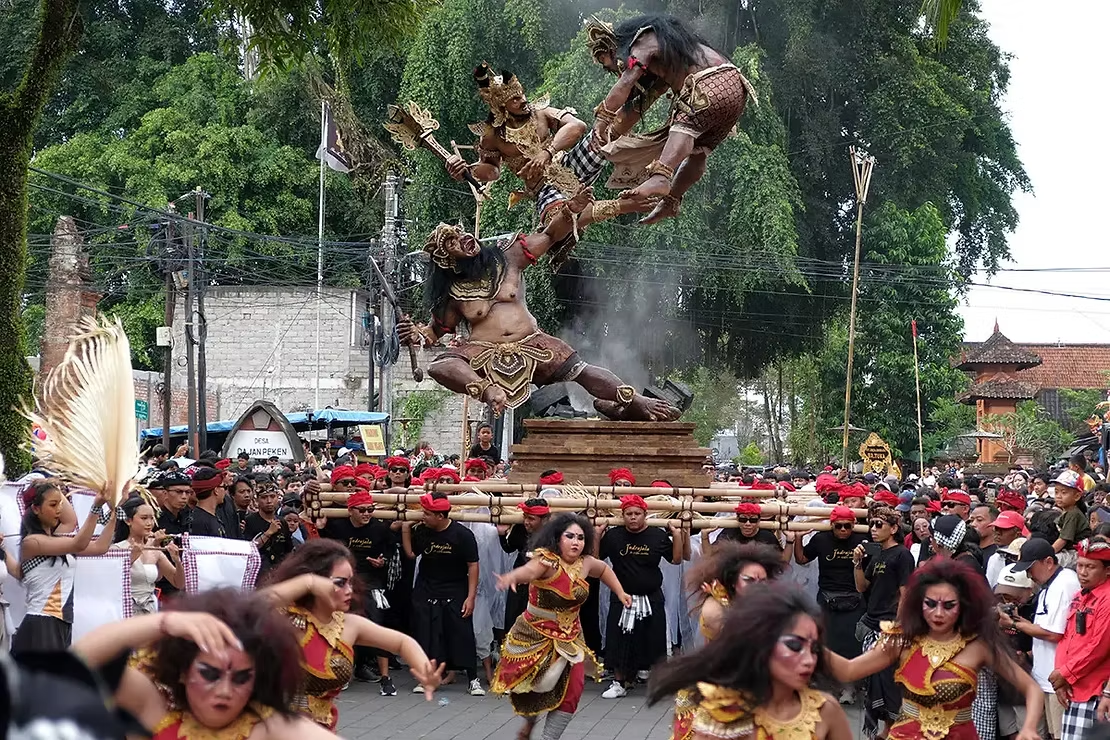
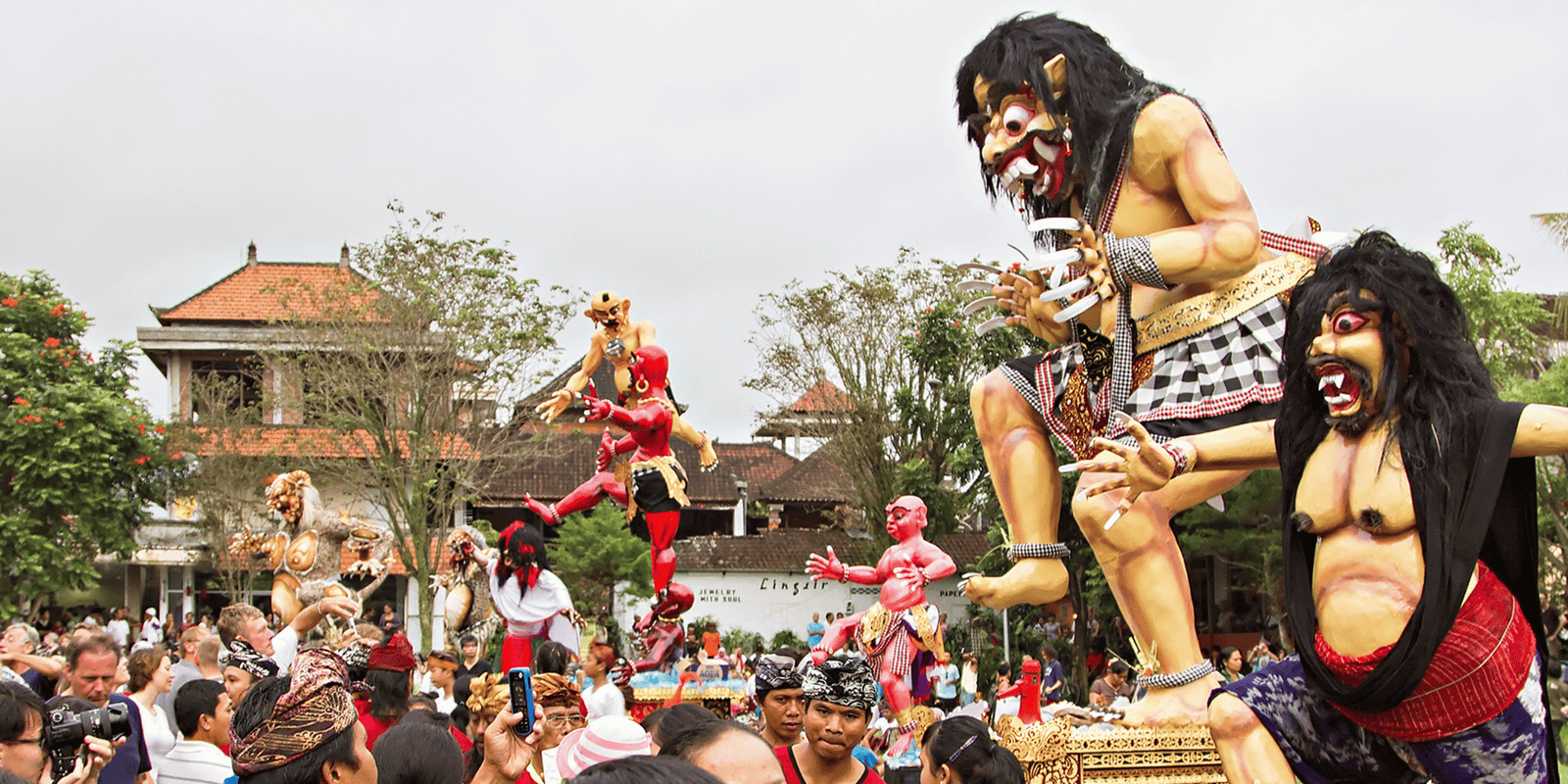
One of the most anticipated events in the lead-up to Nyepi is the Ogoh-Ogoh parade, held on the eve of the holiday. What are Ogoh-Ogoh? They are giant statues made from paper and bamboo, intricately designed and fearsome in appearance, symbolizing evil spirits and negative energy. Crafted by local communities, each Ogoh-Ogoh is a spectacular work of art, most depicting demons from Balinese mythology.
The Ogoh-Ogoh parade takes place on Tawur Kesanga (the night before Nyepi), which in 2025 fell on March 28. The parade is held across all regions of Bali — from tourist hubs like Denpasar, Ubud, Kuta, and Sanur to smaller villages. For a more vibrant Ogoh-Ogoh experience, it is recommended to watch the parade at Puputan Square in Denpasar or along Kuta Beach Road.
As the sun sets, villages across Bali hold grand processions in which the statues are paraded through the streets, accompanied by the sounds of gamelan music, torches, and creative traditional dances. This ritual is believed to awaken and attract negative spirits. As night deepens, the Ogoh-Ogoh are set ablaze, symbolizing the destruction of evil forces and cleansing the island before Nyepi begins.
For non-Hindu visitors who are in Bali during Nyepi, here are some essential tips to keep in mind during this unique holiday:
⭐ Plan Well in Advance: Stock up on food, snacks, and other necessities at least a few days before Nyepi. Avoid shopping the day before, as most supermarkets experience a significant surge in visitors. Additionally, many roads are closed for the Ogoh-Ogoh parade, so heavy traffic is virtually guaranteed at certain points.
⭐ Keep Quiet: Even if you are staying inside a hotel or villa, residents are expected to avoid loud noises, music, or any activity that disturbs the silence.
⭐ Try a Digital Detox: Take advantage of this moment to step away from technology — read a book, spend time with family, or meditate.
⭐ Enjoy the Night Sky: With minimal artificial light and pollution, Nyepi night offers one of the best opportunities to see an incredibly clear, star-filled sky.
⭐ Be Aware of Pecalang: Pecalang are Bali’s traditional security officers who patrol the streets and ensure everyone complies with the rules of Nyepi. Anyone found outside will be asked to return to their accommodation immediately or may even face a fine.
Nyepi is more than just a religious celebration; it is a time of spiritual and environmental transformation. The Balinese people believe that by collectively observing silence, they help maintain balance and harmony in the world. Following the rules not only shows respect for the local culture but also allows you to experience something deeply meaningful.
If someone disrespects Nyepi and its rules — whether by making noise or wandering outside — they will be confronted by the Pecalang. Deliberate disobedience can lead to serious social and cultural consequences, including fines or even being asked to leave the island in extreme cases.
Being in Bali during Nyepi is a rare chance to pause, reflect, and appreciate the beauty of stillness and peace. After all, in today’s noise-filled world, a little silence can be the most meaningful experience of all.